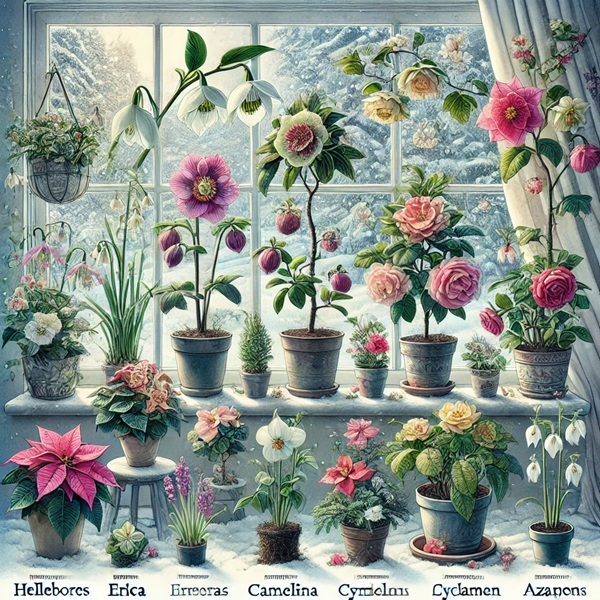
Winter is a time when nature sinks into rest, trees shed their leaves, and the garden seems empty and colorless. However, there are flowers that can delight us with bright colors even during the coldest months of the year. These plants not only decorate gardens and homes, but also lift the mood during short winter days. Winter flowers can be divided into outdoor varieties that can withstand frost, and indoor plants that are able to bloom in conditions of limited light and low temperatures. In this article, we will take a detailed look at which plants can become a decoration for a winter garden or interior, as well as the особенности of their cultivation and care.
Despite harsh conditions, there are flowers that can not only survive winter, but also please us with their bright buds even under the snow. These plants are highly frost-resistant, and some of them begin blooming as early as January.
Erica is one of the most frost-resistant shrubs and can bloom even under snow. Its small pink, white, or lilac flowers remain for several months.
Hellebore (winter rose, Christmas rose) got its name thanks to its ability to bloom during the winter months. It opens its flowers as early as December, decorating the garden with white, pink, and burgundy blooms.
Winter camellia is a plant that can tolerate frosts down to -10°C and delights with large double flowers.
Crocuses are early spring flowers that may begin blooming as early as late winter, especially when the snow cover starts to melt.
Hyacinths can bloom as early as January when forced in pots, filling the home with fragrance.
Bodnant viburnum blooms in the middle of winter, filling the garden with the sweet scent of pink flowers.
Star magnolia can bloom as early as February in southern regions, creating a feeling of spring.
For successful growing of winter flowers in the garden, it is necessary to prepare them for frost in advance. In autumn, the soil is mulched to protect the roots, and in especially cold regions some plants can be covered with spruce branches or agrofabric.
Indoor flowers that bloom in winter help create a cozy atmosphere and fill the home with bright colors. They can flower under short daylight conditions and tolerate the dry air produced by heating appliances.
Poinsettia (Christmas star) is the main symbol of the winter holidays and blooms with red, white, or pink bracts.
Azalea is one of the most spectacular winter flowers, covered with lush clusters of blooms. To flower well, it needs cool temperatures (around +15°C) and high humidity.
Clivia is a plant with large orange flowers that blooms in winter with proper care.
Cyclamen is an elegant plant with refined flowers that resemble butterflies. It prefers cool conditions and abundant watering during the flowering period.
Camellia can also bloom in winter with proper care, but it requires high humidity and moderate watering.
Vriesea is an exotic plant from the bromeliad family that blooms with bright spike-shaped inflorescences.
Daffodils and hyacinths can be made to bloom during the winter months with proper preparation. For this, the bulbs are cooled for 10–12 weeks in autumn and then moved to a warm place for flowering.
Amaryllis is another bulb plant that delights with large buds in winter.
For successful cultivation of indoor winter flowers, it is important to provide additional lighting, since short daylight hours can slow flowering. The best option is grow lights that imitate natural sunlight.
Winter flowers require special care, since their growing conditions differ significantly from those in the summer months. To ensure they delight with their blooms, several important rules should be followed.
Most winter flowers need additional lighting. It is best to place plants on south-facing windows or use grow lights.
Some species, such as cyclamen and azalea, prefer diffused light and may react poorly to direct sunlight.
The optimal temperature for winter-flowering plants is +15 to +20°C.
It is important to maintain high humidity, especially for azaleas, camellias, and poinsettias. For this, humidifiers or trays with moist expanded clay can be used.
Watering should be moderate. In winter, most plants consume less moisture, so the soil should not remain constantly wet.
Feeding is done once a month, using fertilizers with a higher content of phosphorus and potassium.
Winter flowers are a wonderful way to decorate both the garden and the home during the cold season. Thanks to frost-resistant plants such as hellebore, erica, and Bodnant viburnum, the garden can bloom even under snow. Indoor plants, including poinsettia, azalea, and clivia, create comfort and help brighten the gray winter months. The main thing is to follow the care rules: provide enough light, maintain optimal temperature and humidity, and apply feeding in time. Then even in the heart of winter, you can enjoy the bright colors of nature.