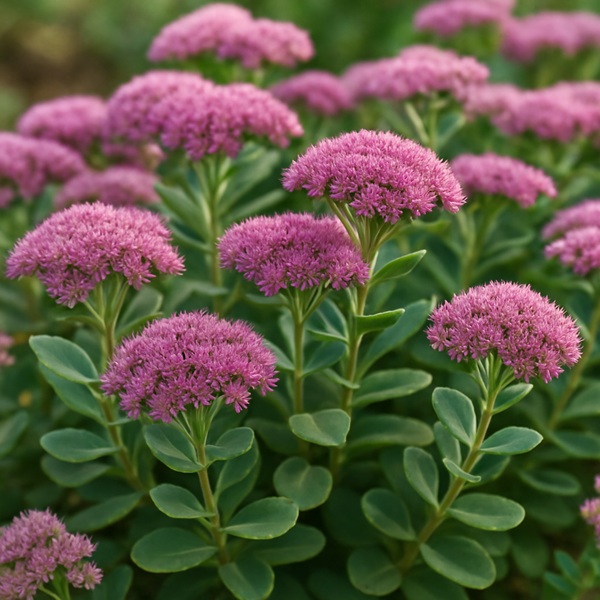
Stonecrop (Sedum) is a perennial succulent plant that has become popular thanks to its ornamental appeal, resistance to drought and frost, and impressive variety of species. In nature, there are more than 500 stonecrop species — from miniature groundcovers to tall, bush-like forms. This crop is especially valuable in Ukraine because it thrives in almost all regions, from the southern steppes to the northern areas. Stonecrops are widely used in landscape design: they decorate alpine gardens, rockeries, flower beds, retaining walls, gravel gardens, as well as green roofs and vertical planted panels.
Gardeners are attracted not only by stonecrop’s beauty and adaptability, but also by how easy it is to care for. The plant propagates easily, adapts quickly to a new location, does not require frequent transplanting, grows well in poor soils, and tolerates long periods without watering. Its fleshy leaves and stems store moisture, making stonecrop an ideal choice for dry sites. It usually flowers from June to September depending on the species, and its small but numerous flowers attract bees, bumblebees, and other beneficial insects.
In Ukraine, the most popular species include showy stonecrop (Sedum spectabile), two-row stonecrop (S. spurium), Kamchatka stonecrop (S. kamtschaticum), goldmoss stonecrop (S. acre), as well as various hybrids and cultivars with purple, silvery, or variegated foliage. These plants are readily grown both in open ground and in containers, on the roofs of houses and gazebos as “green roofs,” and as border plants. Stonecrop is distinguished by its resistance to pests and diseases, as well as its ability to grow where other perennials fail to establish.
Stonecrop belongs to the group of plants that do not require perfect growing conditions. At the same time, a properly chosen site and soil structure greatly affect its ornamental quality, abundance of bloom, and rate of spread. In Ukrainian conditions, it is best to choose sunny, well-ventilated spots, preferably with a slight slope to prevent water from stagnating.
Main requirements:
Light: maximum sunlight is the key to good appearance. Groundcover species are especially sensitive to lack of light: without sun, the stems stretch and the leaves turn pale.
Soil: almost any soil will do except heavy clay. The best option is light, sandy, gravelly soil with a neutral or slightly alkaline reaction.
Acidity: the optimal pH is 6.0–7.5. If the soil is acidic, lime or dolomite flour should be added.
For heavy soils, it is advisable to add sand, perlite, or fine gravel. In rockeries and alpine gardens, artificial layers made of drainage materials are often used. Stonecrop does not need deep loosening — surface loosening is enough, especially during the first months after planting.
Important: in conditions of excess moisture, especially in northern regions or during prolonged rains, a drainage layer is essential. Otherwise, the fleshy stems and roots may rot. This is especially critical before winter — the plant should enter its dormant period in dry conditions.
Stonecrop can be planted in spring, summer, and even autumn — it roots quickly and tolerates transplanting well. The best time is from April to June, while active growth is underway. Autumn planting should preferably be finished by the end of September so the plant has time to adapt before frost.
Methods of propagation and planting:
Division of the clump: a mature plant is divided into sections with roots and rosettes. These can be planted immediately in their permanent location.
Cuttings: shoots 5–10 cm long are cut, dried for several hours, and rooted in a light substrate or directly in open ground.
Seeds: used less often, mainly in breeding work. They are sown in containers or directly in open ground under film.
Planting step by step:
Prepare the site: clear away weeds and level the ground.
Dig holes 5–7 cm deep for groundcover types or up to 15 cm for taller species.
If necessary, add sand or gravel to the bottom.
Plant the stonecrop and lightly firm the soil.
Water moderately, except for cuttings, which should not be watered for the first 2–3 days.
The spacing between plants depends on the species: compact stonecrops are planted 15–20 cm apart, while taller ones need 30–40 cm. Stonecrops spread quickly, forming dense carpets.
One of stonecrop’s main advantages is how undemanding it is. The plant does not need frequent watering, pruning, or special procedures. In Ukrainian conditions, if it is planted in the right place, it requires almost no intervention. Its succulent nature allows it to retain moisture even during the hottest periods of summer.
Watering: stonecrop tolerates drought very well, so it only needs watering during long periods without rain. In the southern regions of Ukraine, outdoor watering can be omitted entirely. In containers, water moderately, only after the soil has dried out completely.
Feeding: in spring, a small amount of balanced mineral fertilizer with low nitrogen content can be applied. In July–August, potassium-phosphorus feeding is desirable, as it encourages longer flowering. Organic fertilizers are not recommended because they stimulate leaf growth at the expense of flowers.
Pruning: carried out as needed. After flowering, the inflorescences can be cut off for a neater appearance. In early spring, frozen or dried shoots should be removed. Some species are thinned once every few years to prevent overcrowding.
For mulching, it is better to use mineral materials such as gravel, expanded clay, or decorative crushed stone. Organic mulch may cause rotting around the base, especially in wet winter conditions.
Most stonecrop species overwinter very well in open ground. But it is important to remember: the real threat is not frost, but excess moisture. Reducing watering in time and choosing the right planting site are the keys to safe wintering even without cover.
How stonecrop overwinters:
South and central Ukraine: no cover is needed. The main thing is that the soil is dry by the time it freezes.
North and west: in conditions of high moisture, light covering with spruce branches or agrofabric is recommended.
In containers: pots are moved to a dry place or insulated on a balcony by wrapping them in fabric or film.
What to do in autumn:
In September–October, cut back faded parts and prepare the plant for winter.
Stop watering or reduce it sharply.
The root zone can be covered with gravel or sand for drainage.
Groundcover species overwinter with green leaves and can even decorate the garden under snow. Taller species, such as showy stonecrop, may partly die back, but they recover quickly in spring.
Thanks to its wide variety of colors, shapes, and sizes, stonecrop has become a universal plant for landscaping. It is used in a great range of settings, from rocky hillsides to modern roofs.
Where stonecrop is used:
Alpine gardens and rockeries: it creates bright accents among stones.
Groundcover carpets: it quickly forms a dense cover, ideal for sunny slopes.
Green roofs, terraces, and concrete areas: thanks to its low soil requirements.
Flower beds, borders, and mixborders: it combines well with many grasses and flowering plants.
Combinations with other plants:
Drought-tolerant herbs: thyme, carnation, lavender.
Grasses: fescue, feather grass, miscanthus.
Succulents: houseleek, echeveria.
Stonecrop is not just a plant for the lazy. It is a truly versatile tool for creating resilient, beautiful, and low-maintenance compositions that can withstand the Ukrainian climate and please the eye from early spring to late autumn.