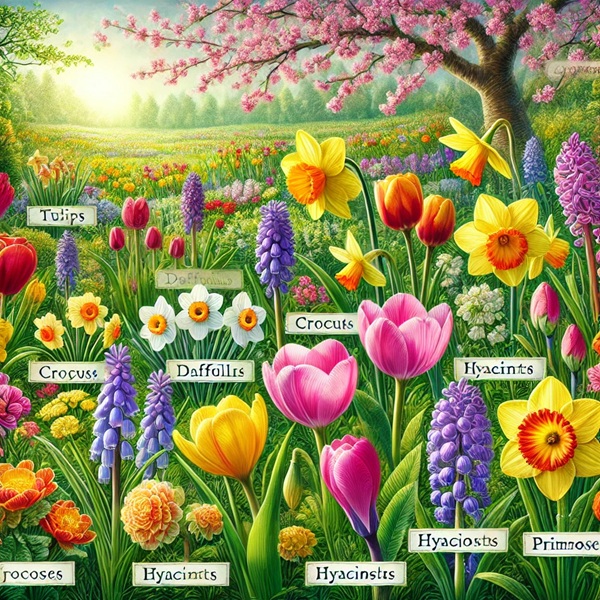
Spring is a time when nature awakens, and after a long winter the world fills with the colors and fragrances of flowers. Spring plants are the first to delight the eye with vivid buds, decorating gardens, parks, and homes. They symbolize renewal, life, and the beginning of a new cycle. Flowers that bloom in spring can be divided into early primroses, bulb flowers, perennials, and indoor plants. Each of these plants has its own characteristics and requires specific care, yet all of them bring joy and harmony to the surrounding space. In this article, we will look at the most popular spring flowers, their features, growing methods, and care recommendations.
Primroses are flowers that begin to bloom immediately after the snow melts, reminding us that warmth is on its way. They are unpretentious, resistant to low temperatures, and able to push through the last snowdrifts.
Snowdrop (Galanthus) is a symbol of spring and one of the very first flowers to appear. These small white flowers bloom as early as February or March. They prefer moist soil, shaded places, and grow especially well in gardens beneath tree canopies.
Scilla is another primrose that colors forests and gardens in blue, lilac, and white shades. This flower does not require special care and can spread by self-seeding.
Chionodoxa is a small plant that blooms at the beginning of spring, forming dense carpets of delicate blue, pink, or white flowers.
Crocuses are among the most popular early spring flowers, with a wide palette of shades including white, yellow, and purple. They are easy to care for and can grow both in the garden and in pots.
Primroses are an ideal choice for creating spring flowerbeds that bring the garden to life as early as the beginning of March.
Bulb plants are classic spring flowers that are planted in the ground in autumn and reward gardeners with their beauty in spring. They stand out for their bright colors, lush buds, and often a pleasant fragrance.
Tulips are among the most famous spring flowers. There are hundreds of tulip varieties that differ in shape, color, and flowering time. They are perfect for cutting and for decorating the garden.
Daffodils are bright yellow, white, and orange flowers that symbolize the spring sun. These plants are easy to grow and can thrive even in poor soils.
Hyacinths are fragrant flowers known for their dense clusters of blossoms and rich shades. They can be grown both outdoors and indoors.
Muscari are miniature blue, purple, and white flowers that resemble grape clusters in shape. They pair beautifully with other spring plants.
Bulb plants need proper preparation. They are planted in loose soil in autumn, and in spring they require moderate watering and feeding.
Perennial spring plants decorate the garden year after year, gradually spreading and forming picturesque flowerbeds. They tolerate winter well and do not need to be replanted annually.
Primula (primrose) is a compact plant with bright flowers that blooms from March to May. It can grow both in the garden and in pots.
Anemone is a striking flower that blooms in spring. Some species, such as the wood anemone, flower as early as March.
Liverleaf is a woodland plant with delicate blue and violet flowers that is resistant to cold.
Bergenia is a perennial with large leaves and bright pink flowers that blooms in April.
Perennial spring flowers help create long-lasting arrangements that do not require annual replanting.
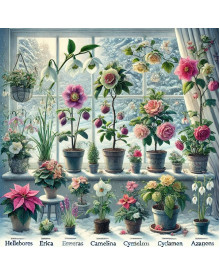
For those who want to enjoy spring blooming at home, there are indoor plants that flower beautifully during this season.
Violets (Saintpaulia) are delicate flowers that can delight with their buds throughout the year, but they bloom especially actively in spring.
Geranium (pelargonium) is an unpretentious plant that produces lush clusters of bright flowers in spring.
Phalaenopsis orchid is one of the most popular indoor plants, known for its long and abundant blooming.
Camellia is an ornamental plant with large flowers that requires increased humidity and cool air.
Indoor spring flowers need proper care: sufficient lighting, moderate watering, and timely feeding.
In spring, plants grow actively, so they need regular watering. However, the soil should not become waterlogged.
Bulb plants should be watered moderately, since excess moisture can cause the roots to rot.
Spring flowers need fertilizers with a high nitrogen content for active leaf growth.
During the budding period, potassium-phosphorus fertilizers are used.
To prevent the plant from wasting energy on seed formation, wilted flowers should be removed in time.
In spring, insect pests such as aphids and slugs become active. Plants are treated with insecticides.
To prevent fungal infections, the soil should be loosened and water stagnation should be avoided.
Spring flowers are a true joy after a long winter. They symbolize the renewal of nature and bring bright colors and fragrances into the world. The main thing is to care for the plants properly, providing them with enough light, watering, and nutrients. Then spring blooming will please the eye and create an atmosphere of warmth and harmony.