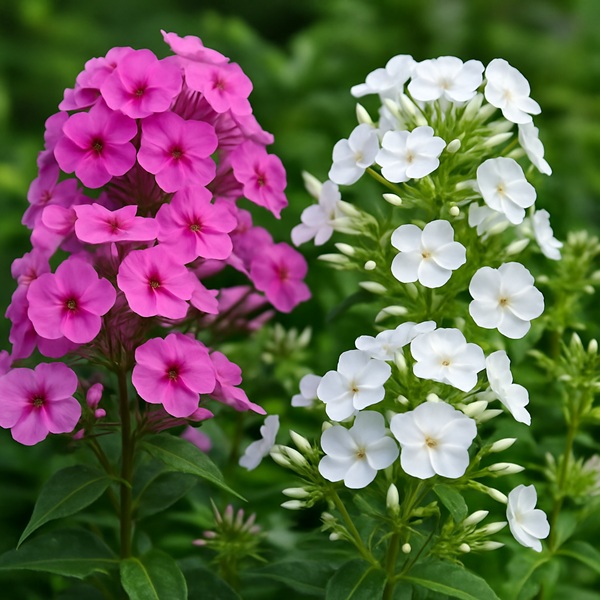
Phlox (Phlox) is one of those flowers without which it is hard to imagine a classic Ukrainian garden. The diversity of shades, resistance to weather conditions, and abundant, long-lasting flowering have made it a favorite among many gardeners. Depending on the species, phlox may be low-growing (groundcover) or tall, bush-forming plants. In Ukraine, perennial varieties are especially popular, such as garden phlox (Phlox paniculata) and moss phlox (Phlox subulata).
The plant has upright, sturdy stems, dense green foliage, and rounded or panicle-shaped inflorescences. The flowers may be white, pink, crimson, lilac, purple, or even blue. The crop overwinters well in the Ukrainian climate, especially in regions with moderately cold winters.
For phlox to delight with lush flowering, it is important to choose the planting site correctly. The ideal option is a sunny area protected from drafts. Light partial shade is acceptable, but with insufficient light the stems become elongated and flowering becomes less abundant. The soil should be loose, fertile, neutral or slightly acidic (pH 5.5–6.5). If the acidity is too high, liming should be done 6–12 months before planting.
It is worth noting that phlox is very sensitive to stagnant water. Clayey, heavy soils without drainage lead to root rot. That is why it is recommended to add sand, humus, and compost before planting to improve the soil structure. Another important point: areas where nightshade crops (potatoes, tomatoes) previously grew are unsuitable for planting phlox because of the risk of nematode infestation and fungal diseases.
Soil preparation is one of the key stages in successfully growing phlox. Two to three weeks before planting, the area is dug over to the depth of a spade, carefully removing weeds and the roots of perennial plants. On poor soils, organic fertilizers are additionally applied: well-rotted manure, compost, or humus. Five to seven kilograms of fertilizer per square meter is enough. If the soil is dense, river sand is added at the rate of 1 bucket per 1 m².
Phlox planting algorithm:
Choosing the time. In spring, phlox is planted from mid-April to late May, when the soil has warmed well. Autumn planting is possible from late August to mid-September.
Preparing the planting holes. The holes are made about 20 cm deep and 25–30 cm in diameter. Leave 40–60 cm between plants for tall varieties and 25–30 cm for groundcover types.
Applying fertilizer. Add a handful of ash and one tablespoon of a complex mineral fertilizer to each hole, mixing it with the soil.
Planting the plant. The roots are carefully spread out, placing the root collar 2–3 cm below soil level. After planting, phlox is watered generously and mulched with peat or humus.
A useful tip: when buying plants, pay attention to the condition of the roots and shoots. The root system should be light-colored and firm, and the stems should show no signs of wilting or spotting. When replanting or dividing old clumps, it is best to choose specimens that are 4–5 years old, as they give the strongest new growth.
Phlox does not require overly complicated care, but the stability of flowering and the ornamental quality of the clumps directly depend on following the basic rules of cultivation. Regular care includes the following stages:
Watering. Phlox likes moisture, especially during active growth and budding. Water generously, but without allowing water to stagnate. In hot weather, watering is needed 2–3 times a week. The best time is morning or evening.
Feeding. For abundant flowering, phlox needs regular nutrition. In spring, it is fed with nitrogen fertilizers such as ammonium nitrate; at the beginning of summer, with complex formulations rich in phosphorus and potassium; and in autumn, with phosphorus-potassium fertilizers to prepare for winter.
Loosening and mulching. After watering, the soil should always be loosened to improve air access to the roots. Mulching with humus or cut grass helps retain moisture and suppress weed growth.
Pruning. After flowering ends, faded inflorescences are removed to prevent seed formation and stimulate repeat blooming.
Sanitary pruning is also carried out in spring: weak and damaged shoots are removed. If the clumps become too dense, thinning is necessary — this improves air circulation and reduces the risk of fungal diseases.
Preparing phlox for winter deserves special attention. In autumn, after the first frosts, the stems are cut back to a height of 5–10 cm above the ground. The surface of the bed is mulched with a thick layer of peat, humus, or fallen leaves. In regions with severe winters, additional cover with spruce branches or agrofabric is possible.
Propagating phlox is a simple process that makes it possible to obtain healthy, vigorous plants while preserving varietal characteristics. In Ukraine, the three most common methods are dividing the clump, taking cuttings, and growing from seed. Each option has its own features.
1. Dividing the clump is the most popular and most reliable method. It is done in spring (April–May) or early autumn (late August–September). An adult clump is carefully dug up and divided into several parts so that each section has 2–5 shoots with roots. The divisions are planted immediately in a new place and watered generously. The main thing is not to let the roots dry out during the process.
2. Cuttings are best suited to summer. The ideal time is June or early July, when the stems are still flexible enough. Cuttings 10–15 cm long with a pair of leaves are taken from healthy shoots, removing the lower leaves. They are rooted in loose, moist soil under film or in a greenhouse. With regular misting, roots appear in 2–3 weeks.
3. Seed propagation is used less often, since varietal qualities are often lost. However, for breeding work or obtaining new hybrids, this method is indispensable. Seeds are sown in open ground in autumn or early spring. To improve germination, they may be stratified beforehand by keeping them for several weeks at +2...+5 °C.
It is worth remembering that young plants need especially careful care: regular watering, protection from direct sunlight, and feeding with a weak fertilizer solution. Successfully rooted young plants often do not flower in the first year, but in the second season they are sure to produce full inflorescences.
Although phlox is considered a relatively resilient flower, unfavorable weather conditions and care mistakes may lead to the appearance of diseases and pests. Proper prevention and timely action help preserve the ornamental quality of the planting.
The most common phlox diseases are:
Powdery mildew — a white coating on the leaves that gradually spreads over the whole plant. It often appears with high humidity and overcrowded planting. To prevent it, good air circulation should be ensured, the clumps should be thinned regularly, and at the first signs the phlox should be treated with fungicides such as Topaz, Skor, or a colloidal sulfur solution.
Phomosis — a fungal disease that causes wilting and blackening of the stems. The affected parts should be removed and burned, and the plants treated with copper-containing preparations.
Septoria leaf spot — brown spots on the leaves that lead to premature leaf fall. The disease develops actively in wet weather. Copper-based products help control it.
Among pests, phlox is threatened by:
Spider mites — tiny pests that cause leaf discoloration and wilting. Acaricides such as Fitoverm and Actellic are effective.
Thrips — microscopic insects that damage buds and leaves. They require treatment with insecticides.
Nematodes — microscopic worms that cause stem thickening and leaf deformation. If they are found, the clumps must be removed and burned, and the soil treated with nematicides.
Prevention of disease includes observing crop rotation, preparing the soil properly, sanitary pruning, and moderate watering. Removing plant debris in autumn and digging the soil greatly reduces the risk of overwintering pathogens and pests.
Phlox is a versatile plant that fits easily into many garden design styles. Thanks to its lush flowering and rich range of colors, it becomes a vivid accent in flower beds, mixed borders, and even living borders.
Ways to use phlox:
Classic flower beds. Tall varieties look ideal in the background of perennial flower beds together with delphiniums, peonies, and lilies.
Mixed borders. In mixed plantings, phlox creates bright patches of color among ornamental shrubs, grasses, and other perennials. It helps shape smooth color transitions.
Rock gardens and rabatkas. Low-growing moss phlox is excellent for decorating rocky gardens. In spring it forms bright carpets that completely cover the ground.
Living borders. Medium-height phlox can become the basis for flowering borders along paths, fences, or gazebos.
Container planting. Dwarf phlox varieties can be grown successfully in pots, decorating terraces and balconies.
Particular attention should be paid to color combinations. For example, white and crimson phlox together create striking contrasts, while using different shades of the same color — from soft pink to purple — adds depth and volume to the flower bed. Groups of bluish or lilac phlox also look refined next to the silvery foliage of lamb’s ear or ornamental grasses.
Ukraine’s climate makes it possible to grow phlox in almost all regions — from Polissia to the southern steppes. The main thing is to select the varieties according to local conditions and provide minimal care. In return, phlox will reward you with abundant, long-lasting flowering and decorate any garden plot.