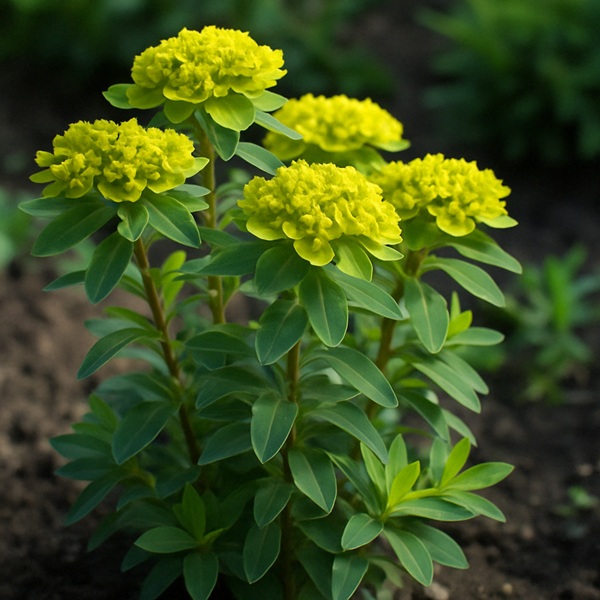
Euphorbia is one of the most interesting and diverse plants cultivated both indoors and in garden settings. The genus includes more than 2,000 species — from miniature succulents to tall shrubs and tree-like forms. This diversity explains euphorbia’s enormous popularity among gardeners and flower growers. In Ukraine, the most commonly grown ornamental species are cushion spurge (Euphorbia polychroma), cypress spurge (Euphorbia cyparissias), Griffith’s spurge (Euphorbia griffithii), as well as succulent indoor forms such as Madagascar jewel, African milk tree, crown of thorns, and others.
The key feature of all representatives of this genus is the presence of a white milky sap, which is where the plant gets its name. This sap contains toxic compounds that can irritate the skin and mucous membranes. That is why care should be taken when handling the plant: wear gloves, avoid getting the sap in your eyes or on exposed skin, especially when children or pets are nearby. Despite its toxicity, some species of euphorbia have medicinal properties and are used in folk medicine for external use, particularly for treating warts and wounds.
Euphorbia is not just an ornamental plant, but a true all-rounder for Ukraine’s climate conditions. Depending on the species, it may overwinter in open ground, tolerate drought and heat, grow in poor soils, and even develop in partial shade. Many species have an unusual appearance: bright bracts, distinctive leaves, or stems resembling cacti. Euphorbia fits perfectly into landscape compositions such as rock gardens, alpine slides, mixed borders, and even minimalist flower beds. Thanks to its hardiness and visual appeal, it has become a favorite among those who want to decorate a garden without too much effort.
Before planting euphorbia, it is important to decide on the species and its purpose: whether it will be an ornamental garden plant or an indoor crop. For open-ground cultivation in Ukraine, perennial frost-hardy species are suitable — cushion spurge, cypress spurge, and Griffith’s spurge. These species can survive winter in the southern and central regions, and with proper cover, also in northern areas. They form dense bushes 30–70 cm tall with distinctive foliage and bright bracts. Flowering lasts from May to mid-summer, and some varieties change their leaf color to bronze or red, adding extra decorative value.
For growing in pots or on balconies, growers more often use Madagascar jewel (Euphorbia leuconeura), African milk tree (Euphorbia trigona), crown of thorns (Euphorbia milii), or pencil cactus (Euphorbia tirucalli). These species are succulents that prefer bright light, infrequent watering, and dry air. They combine well with cacti in arrangements and are especially popular in interiors and offices. It is important to remember that such euphorbias cannot tolerate frost and are grown only indoors or as tub plants.
To plant euphorbia in open ground, choose a sunny, wind-protected spot with good drainage. The best soils are light, sandy, neutral, or slightly alkaline. Euphorbia does not tolerate heavy clay soil with stagnant water very well. Before planting, it is worth adding compost or humus (up to 3–4 kg per m²), as well as ash or dolomite flour to regulate acidity. In containers, it is best to use a ready-made succulent substrate with mandatory drainage, such as expanded clay at the bottom.
Euphorbia is planted in open ground in spring — from late April to mid-May, once the threat of night frosts has passed. This is especially important for heat-loving species and seedlings. The soil temperature should be no lower than +10°C. Plants are spaced 30–50 cm apart depending on the size of the mature plant. When planting, make sure the root collar is not buried too deeply, otherwise rotting may occur. After planting, the plants are watered well, and during dry periods watering is repeated 1–2 times a week.
In the first year, euphorbia needs moderate but regular watering — excess water is dangerous for it. It is best to water after the top layer of soil has dried out, avoiding moisture on the leaves and stems. This is especially important for succulent species, which store moisture in their tissues and do not tolerate excessive dampness. To preserve moisture and reduce weed growth, the soil around the plant can be mulched with gravel, bark, or expanded clay.
Feeding during the first year after planting is generally not necessary, especially if the soil was fertilized in advance. Starting from mid-summer, a balanced mineral fertilizer with a higher phosphorus and potassium content can be applied — this will encourage flowering and bud formation for the next season. For potted plants, liquid fertilizers for cacti and succulents are suitable and are applied once every 3–4 weeks during active growth. Excess nitrogen should be avoided, since it stimulates leafy growth at the expense of flowering and hardiness.
Flowering is the decorative period that gives euphorbia its special expressiveness. In open ground in Ukraine, euphorbia usually blooms from May to July, while indoor species can bloom almost all year round under proper lighting. In most species, the flowers themselves are small, but the real effect is created by the bright bracts — yellow, pink, red, or orange. Crown of thorns and cushion spurge look especially striking: their inflorescences remain on the plant for a long time, making it a real decoration for the interior or garden.
During the growing season, euphorbia develops actively if it is provided with enough light and regular, moderate watering. Drafts and excessive humidity should be avoided, especially for indoor species. Feeding during budding and flowering improves the color of the bracts and prolongs the blooming period. Some species may drop leaves after flowering — this is normal. Once flowering ends, sanitary pruning is carried out: faded shoots, dried parts, and weak branches are removed to stimulate the formation of new growth.
Euphorbia is propagated by seed or vegetatively. The seed method is used rarely, as it takes longer and does not always preserve varietal characteristics. The most common methods are rooting cuttings or dividing the bush. Cuttings are taken in May–June, dried for 1–2 days so the sap stops flowing, and then planted in moist sand or a succulent substrate. Rooting stimulants may be used for better results. Rooting usually takes place within 2–3 weeks. Division of mature bushes is carried out in spring or autumn, especially for perennial plants grown outdoors.
Euphorbia is one of the most resilient plants, but under unfavorable conditions or when care routines are нарушені, pests and diseases may appear. The most common pests are aphids, spider mites, scale insects, and mealybugs. They appear especially often on indoor euphorbias where air circulation is poor. In case of infestation, insecticides such as Fitoverm, Aktara, or Actellik may be used, or the plant can be treated with a soap solution. Plants with smooth leaves can also be wiped with a damp cloth to remove pests mechanically.
The most common diseases are root and stem rot caused by overwatering. The main symptoms are wilting leaves, darkening near the base, and an unpleasant smell. In such cases, the plant must be removed from the soil, the affected areas cut away, the cut sections treated with ash or activated charcoal, and then repotted into a fresh, loose substrate. The best prevention is moderate watering and good drainage. Powdery mildew may also develop in humid conditions and is treated with fungicides such as Skor or Topaz.
Preventive measures include using sterile tools during pruning, airing out the room, avoiding overcrowded plantings, and controlling humidity levels. In open ground, it is recommended to carry out pest treatment in spring, especially if insect-attracting crops are growing nearby. In autumn, dry leaves should be removed and sanitary pruning carried out to prevent larvae and fungi from overwintering.
Preparation for winter depends on the euphorbia species and the region of Ukraine. Frost-hardy species such as cushion spurge and cypress spurge can overwinter without cover in the southern and central regions. In northern regions, it is advisable to mulch the root zone or cover the plant with agrofiber, spruce branches, or dry leaves. Such cover helps protect the roots during frosts and sharp temperature fluctuations.
Indoor and tub-grown euphorbias are brought indoors with the first cold spell. They need a bright, cool place with temperatures no lower than +10°C. Watering is reduced to once every 10–14 days. In winter, euphorbia may slow its growth or shed some of its leaves — this is natural. From March onward, watering is gradually increased, repotting is carried out, and the first feeding is applied. From April, the plants can be taken outdoors, avoiding any sudden change in conditions.
Euphorbia is an ideal plant for those who want to combine ornamental value with hardiness. With proper care, it blooms every year, retains its brightness, and adapts easily to different conditions. It can be combined with stones, cacti, and minimalist or natural garden styles. For Ukraine’s climate, euphorbia is a reliable choice both for the garden and for the home: hardy, attractive, and undemanding.