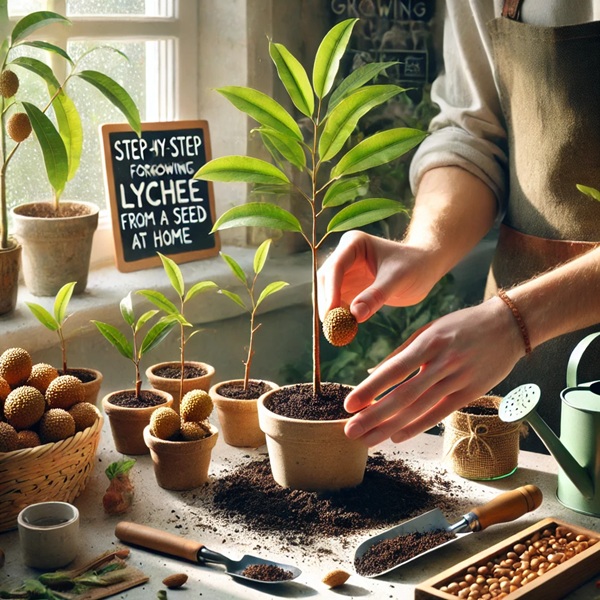
Lychee is an exotic fruit tree native to China, prized for its tasty and juicy fruits with a distinctive sweet flavor and light floral notes. These fruits are rich in B vitamins, vitamin C, magnesium, potassium, and antioxidants. In many Asian countries, lychee is not only considered a refined dessert, but also a symbol of luck and prosperity. Recently, more and more people have been trying to grow lychee on their own in order to enjoy not only the fruits, but also the beauty of this unusual plant.
At first glance, growing a tropical plant at home may seem difficult. However, with proper care and by following all recommendations, lychee can be successfully grown even in a temperate climate. The process requires patience and attention, since lychee grows slowly and it may take several years before the first fruits appear. Still, even once the first sprouts emerge, this plant becomes an attractive part of the interior, giving the home an exotic atmosphere.
In this guide from Marta Flowers, we will explain in detail how to grow lychee from a seed at home — from preparing the seed to caring for a mature plant and tips on encouraging fruiting. You will learn what conditions are needed for successful cultivation, how to care for lychee at different times of the year, and which mistakes to avoid.
The first stage of growing lychee is choosing the right fruits to obtain seeds. To grow a strong and healthy plant, you need to choose fresh and high-quality fruits. The best option is lychee bought in specialized stores or at markets where fresh tropical fruits are sold.
Main criteria for choosing lychee fruits for germination:
Freshness of the fruit: Choose only fresh fruits with bright red skin. Avoid fruits with signs of spoilage, mold, or damage.
Integrity and ripeness: The fruit should be firm, with juicy and aromatic flesh. A ripe lychee has a characteristic sweet smell and separates easily from the seed.
Condition of the seed: After removal, the seed should be hard, whole, and smooth. Avoid using dried or damaged seeds.
The process of preparing a lychee seed:
Removing the seed: Carefully cut the fruit with a knife and take out the seed, trying not to damage it.
Cleaning: Rinse the seed under running water to remove any flesh residue. This is important to prevent mold during germination.
Soaking: Soak the seed in warm water for 24–48 hours. This activates internal processes and prepares the seed for planting. The water should be changed every 12 hours.
Checking viability: After soaking, a healthy seed becomes slightly swollen and darker. If the seed remains hard and unchanged in appearance, the chance of germination is minimal.
To speed up germination, you can carefully file one edge of the seed or slightly crack the shell. This makes it easier for the sprout to emerge. However, it is important to be careful not to damage the inner part of the seed.
To grow lychee successfully, you need to create conditions as close as possible to its natural habitat — a subtropical or tropical climate. Special attention should be paid to soil preparation, pot selection, and watering.
Optimal soil mix for lychee:
2 parts garden soil
1 part humus or compost
1 part river sand for better drainage
A small amount of perlite or vermiculite to improve air permeability
The soil should be light, nutritious, and well-drained. To reduce the risk of fungal infections, the substrate can be sterilized before use by pouring boiling water over it or using a weak potassium permanganate solution.
Choosing a pot for planting lychee:
A small pot at least 15 cm deep with mandatory drainage holes is suitable for planting a lychee seed. A drainage layer of expanded clay, small gravel, or broken brick should be placed at the bottom of the pot to prevent water stagnation.
Step-by-step instructions for planting a lychee seed:
Fill the pot with the prepared soil, leaving 2 cm to the rim.
Make a hole 2–3 cm deep.
Place the seed horizontally in the hole for better sprout emergence.
Cover the seed with soil and lightly firm it down.
Water with warm water, avoiding overwatering.
After planting, cover the pot with plastic film or glass to create a greenhouse effect. The container should be placed in a warm, bright spot with a temperature of about 25°C. Do not forget to air out the mini-greenhouse and maintain soil moisture. The first sprouts may appear within 2–6 weeks, depending on growing conditions and seed quality.
Once the first sprouts appear, the most important care stage begins. Lychee requires careful attention and specific conditions for normal growth and development.
Lighting and temperature
Lychee is a light-loving plant. For successful development, it needs bright but diffused light. It is best to place the pot on a south- or east-facing windowsill. In the autumn-winter period, when natural light is insufficient, it is recommended to use grow lights to extend daylight hours to 12 hours.
The optimal temperature during the warm season is 22–28°C. In winter, the temperature should be slightly lower — around 15–20°C — in order to slow growth and allow the plant to rest.
Watering and air humidity
Lychee needs regular and moderate watering. The soil should remain slightly moist, but not wet. Avoid both letting the soil dry out completely and overwatering, since this may lead to root rot or fungal infections.
Watering recommendations:
Use soft, settled water at room temperature.
In summer, water 2–3 times a week; in winter, no more than once a week.
Monitor air humidity. In dry rooms, spray the leaves regularly or use a humidifier.
Feeding and fertilizers
Two to three months after the first sprouts appear, feeding should begin. During the spring-summer period, it is best to use organic and mineral fertilizers containing nitrogen, phosphorus, and potassium. Fertilizer is applied once a month.
Crown shaping
When the plant reaches a height of 30–50 cm, you can begin shaping the crown. To do this, gently pinch the top in order to stimulate side shoot growth. This helps form a lush and symmetrical crown.
As the plant grows, it needs to be moved into a larger pot. This ensures proper root development and full growth.
Preparing for repotting
Repotting should be done in spring before active growth begins. Choose a pot that is 5–7 cm larger in diameter than the previous one. During repotting, you must act carefully so as not to damage the root system.
Step-by-step repotting instructions:
Carefully remove the plant from the pot together with the root ball.
Remove excess old soil without damaging the roots.
Place a drainage layer in the new pot and add fresh nutritious soil.
Put the plant into the new container and fill in the remaining soil.
Firm the soil and water with warm water.
Caring for a mature plant
A mature tree requires more space and regular care. Watering remains moderate, but during hot periods it should be done more often. Fertilizing in spring and summer should contain more potassium and phosphorus to stimulate flowering and fruiting.
Pruning a mature tree
Pruning should be done every year to maintain the crown shape and stimulate the appearance of new shoots. Weak, dry, and damaged branches should be removed.
Flowering and fruiting
Lychee begins to flower and bear fruit several years after planting — usually after 4–6 years under ideal growing conditions. To stimulate flowering, the plant needs a dormant period in winter with reduced temperature and less watering.
Growing lychee from a seed is a long but fascinating process that requires patience and care. This exotic tree will not only become an elegant decoration for your home, but can also reward you with tasty and fragrant fruits.
Main tips for successful lychee cultivation:
Use only fresh and high-quality fruits to obtain seeds.
Provide the plant with light, nutritious, and well-drained soil.
Maintain enough light and a stable temperature regime.
Water and feed the plant regularly.
Prune in time to shape the crown and maintain the tree’s health.