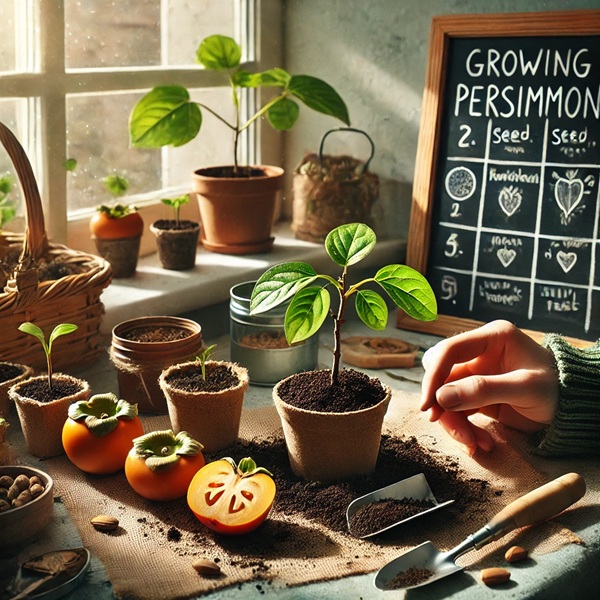
Growing persimmon from a seed is not only an exciting experience, but also a real opportunity to cultivate a beautiful and fruit-bearing tree right at home. Although persimmon is considered a southern plant, it is fully capable of developing in cooler regions if given proper care and a comfortable environment. This process requires patience and attention, but the result is worth the effort.
This tree will not only decorate your interior or garden, but can also become a source of fresh and tasty fruit. It is important to understand that growing persimmon from a seed is a task that includes several consecutive stages: from selecting the planting material to caring for the mature plant. In this guide from Marta Flowers, you will find detailed instructions for each stage of this interesting process.
The first and very important step in growing persimmon is choosing the right seed. The quality of the seed determines how successfully your gardening experiment will begin.
Choose ripe fruits: it is best to use persimmons from well-ripened fruits, preferably local varieties.
Avoid treated fruits: fruits from supermarkets are often treated with chemicals to extend shelf life, which lowers the chances of germination.
Check the condition of the seed: the seed should be firm, without cracks or signs of rot.
After removing the seed, it should be thoroughly rinsed under running water to remove any remaining pulp. This is important because even a small amount of pulp can encourage mold to form.
Soaking: place the seed in warm water for 24–48 hours. This helps activate internal processes and speeds up germination.
Scarification: to accelerate germination, you can carefully file the seed coat or slightly crack the edge. This makes it easier for the sprout to break through the hard shell.
Stratification: at the final stage of preparation, the seed should be placed in moist sand or moss and kept in the refrigerator for 1–2 months at about 4°C. This process imitates winter conditions and activates growth.
After stratification, the seed is ready for planting. Before that, however, it is important to prepare suitable soil and choose the right pot.
Persimmon needs a light, nutritious, and well-drained substrate. You can buy a ready-made mix, but you can also prepare it yourself. For this, mix:
2 parts garden soil
1 part river sand for drainage
1 part peat or humus to enrich the soil
Before planting, it is advisable to sterilize the soil to prevent fungal diseases. This can be done by heating the soil in the oven or watering it with a weak potassium permanganate solution.
Choose a pot at least 10–15 cm deep with drainage holes.
Place a drainage layer of expanded clay or small gravel at the bottom.
Fill it with the prepared substrate, leaving about 2 cm to the rim.
Place the seed vertically at a depth of 2–3 cm and carefully cover it with soil.
Moisten the soil with warm water and cover the pot with film or glass to create a greenhouse effect.
Important: place the pot in a warm, bright spot with a temperature of about 20–25°C. Under proper conditions, the first sprouts will appear in 3–6 weeks.
After the first sprouts appear, the most important stage begins — caring for the plant. A young persimmon tree requires special attention and careful treatment.
Persimmon loves light and warmth, so it is best placed on a south- or east-facing windowsill. In the autumn-winter period, when natural light is insufficient, it is recommended to use grow lights to extend daylight hours to 10–12 hours. This helps prevent the stems from stretching and promotes even growth.
The plant should be watered regularly, but excessive moisture should be avoided so the roots do not rot. Use warm, settled water for watering. In winter, watering should be reduced to once a week; in summer, increased to 2–3 times a week.
The first fertilizer application is recommended 1.5–2 months after the first leaves appear. During the spring-summer period, mineral fertilizers containing nitrogen, potassium, and phosphorus should be used. In the cold season, fertilizing should be stopped because the plant slows its growth at that time.
When the tree reaches a height of 30–40 cm, crown formation should begin. Pinch the top to stimulate the growth of side shoots and give the plant a compact, decorative shape.
As soon as the root system begins to fill the pot, the persimmon should be transplanted into a larger container. Repotting is best done in spring before active growth begins. The new pot should be 5–7 cm larger in diameter than the previous one.
As the tree grows larger, caring for it becomes more complex. It needs regular watering, proper lighting, crown formation, and preparation for possible fruiting.
Watering a mature plant should be regular, especially during active growth in spring and summer. Use soft, settled water at room temperature. It is important not to allow water to stagnate in the pot so root rot can be avoided.
Feed the plant every two weeks during the active growth period, using fertilizers high in potassium and phosphorus. This stimulates flowering and fruit formation.
Every year at the beginning of spring, formative pruning should be done. Weak, dry, and damaged branches should be removed to ensure good air circulation inside the crown.
In the warm season, a mature persimmon can be moved to a balcony or terrace. This helps strengthen and harden the tree. Drafts and sharp temperature changes should be avoided.
If you are growing persimmon in open ground, it must be protected from frost. To do this, wrap the tree in protective materials or move it to a warmer place.
Possible causes:
Low-quality planting material
Insufficient stratification
Low temperature during germination
This may be caused by:
Lack of nutrients
Excess watering or overly dry soil
Air that is too dry
Possible causes:
Temperature fluctuations
Insufficient lighting
Drying out of the roots
The following pests may appear on persimmon:
Aphids
Spider mites
Scale insects
To fight them, use a soap solution or special insecticides. To prevent root rot, it is important to maintain moderate watering and provide good drainage.
Growing persimmon from a seed is an interesting and rewarding process that requires patience and care. With proper attention, the tree will not only become a beautiful part of your home, but may also produce delicious fruit.
Use high-quality seeds from ripe fruits.
Carry out stratification before planting.
Provide proper drainage and nutritious soil.
Maintain the right watering and lighting schedule.
Prune and fertilize regularly.