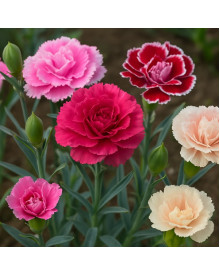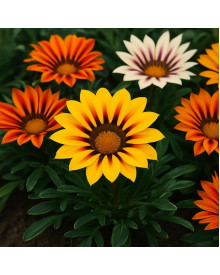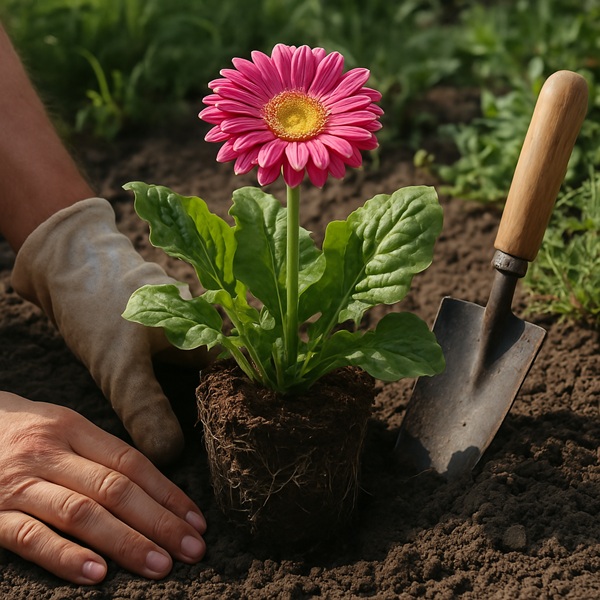
Gerbera (Gerbera jamesonii) is one of the brightest representatives of the daisy family, successfully grown both in ornamental gardens and in pots. Gerbera flowers resemble large daisies with expressive petals in a wide range of shades — from soft pink to rich orange and burgundy. In the conditions of Ukraine, with its temperate continental climate, this plant requires certain conditions and proper care, especially in regions with unstable spring and autumn temperatures.
Climate zones of Ukraine and growing possibilities for gerbera:
South and southeast (Odesa, Kherson, Mykolaiv regions) — ideal for open-ground cultivation thanks to the long warm season and minimal risk of frost.
Central and eastern regions (Kyiv, Poltava, Dnipropetrovsk regions) — planting in open ground is possible, but with shelter for the autumn period.
North and west (Lviv, Volyn, Chernihiv regions) — container or greenhouse cultivation is recommended.
When choosing a variety for a specific region, it is worth considering not only decorative qualities but also frost resistance. Large-flowered hybrids are more often used in pot culture, while miniature varieties are better suited for greenhouses or flowerbeds with the option of covering them.
It is worth remembering that gerbera is a short-day plant. This means its flowering depends on the length of daylight. In Ukraine, spring and autumn are the most favorable periods for bud formation. However, in summer, excessive sunlight without shading can slow flowering, especially if watering and ventilation are not properly managed.
A properly selected substrate is the key point in growing gerbera. The plant does not tolerate heavy, dense, waterlogged soils with stagnant moisture. Ideal soil should be loose, breathable, and have a neutral or slightly acidic reaction (pH 5.5–6.5). In Ukrainian conditions, especially on chernozem soils, it is advisable to lighten the soil by adding sand, perlite, peat, or fine expanded clay. This improves drainage and helps prevent root rot.
The planting mix can be prepared independently:
2 parts leaf soil;
1 part peat;
1 part coarse river sand;
optionally, 0.5 parts perlite for better aeration.
Before planting, the area should be dug over, enriched with organic matter (compost or humus, but not fresh manure), and treated with a fungicide against fungal diseases, to which gerbera is especially susceptible in cool and damp weather. If you are growing gerbera in a container or pot, make sure there is a drainage hole and a layer of expanded clay or pebbles at the bottom.
Planting times:
In open ground — from late May to mid-June, after stable warm weather is established and the risk of return frosts has passed.
In greenhouses and hotbeds — from April, provided the temperature is kept no lower than +16 °C.
Indoors — year-round, but with additional lighting in winter.
Planting depth should be such that the root collar remains on the surface — burying it can cause rotting. After planting, the plant is watered generously with warm, settled water and shaded for 2–3 days. After a week, gerbera can begin to be fed with complex fertilizers with a predominance of potassium and magnesium.
Gerbera is quite demanding in care. Throughout the growing season, it needs a comfortable temperature regime, moderate watering, and good lighting. In Ukraine, it is often necessary to balance between hot days and cool nights, especially in spring and autumn. Gerbera does not tolerate overwatering: this leads to root rot, the development of gray mold, and fusarium. That is why it is especially important to establish a proper watering routine.
Watering rules:
Water gerbera after the top layer of soil has dried.
In hot weather — 2–3 times a week; in cloudy weather — once every 5–6 days.
The water should be warm (+20...+22 °C), settled, and chlorine-free.
Do not pour water into the center of the rosette — this can cause rotting.
Fertilizing is applied once every 10–14 days, starting from the third week after planting. Gerbera responds well to water-soluble complex fertilizers containing potassium, magnesium, and phosphorus. Nitrogen fertilizers are used minimally — only at the beginning of growth, otherwise shoots may stretch and the decorative quality of the flowers may decrease. From July to September, it is recommended to use potassium-phosphorus formulations (for example, potassium monophosphate) to stimulate abundant flowering.
It is important to know:
Gerbera is sensitive to sudden temperature fluctuations and drafts. In open ground in autumn, when night-time cooling begins, temporary shelter should be provided — agrofabric or a small greenhouse. Indoors, windowsills must not be allowed to get too cold — for this, foam board or a wooden stand is placed under the pot.
The most common problems when growing gerbera:
Curling and wilting of leaves — a result of overwatering or fungal infection.
Yellowing leaves — may indicate chlorosis, iron deficiency, or magnesium deficiency.
Lack of flowering — caused by excessively long daylight hours or too much nitrogen.
Spots and mold on the leaves — the result of excessive humidity and poor ventilation.
For disease prevention, it is advisable to treat the plant with biofungicides (for example, “Fitosporin”) once every 2–3 weeks, and if pests appear (aphids, spider mites), use biological insecticides such as “Actofit” or “Fitoverm.”
Gerbera can be propagated in several ways, each with its own features and requirements. In Ukrainian conditions, where summer may be hot and spring unstable, the most effective methods are dividing the bush and cuttings. Seed propagation is also possible, but it requires more time and attention, especially at the seedling and pricking-out stages.
1. Dividing the bush
This is one of the most popular and reliable methods. It is carried out in spring or early autumn, when gerbera is outside its active flowering phase. The bush is carefully dug up and divided into 2–3 parts, leaving at least 2–3 growth points and a well-developed root system on each division. The cut surfaces are dusted with crushed charcoal or treated with a fungicide. Planting into new soil is done immediately, following all the rules: shallow planting, moderate watering, and protection from direct sunlight in the first few days.
2. Cuttings
Healthy, strong leaves with a fragment of the basal part are selected for cuttings. The cuttings are rooted in moist sand or vermiculite, covered with film or a glass jar. The rooting temperature should be +22...+25 °C. After 4–5 weeks, roots appear, and the young plants can be transplanted into separate containers.
3. Seed propagation
A less popular method, especially among beginners, because it requires patience. Gerbera seeds quickly lose viability, so only freshly collected or certified material should be used. Sowing is carried out in February–March in a light, disinfected substrate. Sowing depth is no more than 0.5 cm. The container is covered with glass or film and kept at +20...+24 °C. Seedlings appear in 10–14 days, after which they are pricked out and planted into separate cups.
Tip: when propagating hybrids by seed, varietal traits may not be preserved. Therefore, this method is mainly used when the goal is to grow gerbera for decorative purposes rather than for further propagation.
For successful perennial cultivation of gerbera in Ukraine, it is important to organize wintering correctly. Although gerbera is considered a perennial, it does not tolerate frost well in open ground. Even in the southern regions of the country, in the absence of snow and with a sharp drop in temperature to -5...-7 °C, the roots may freeze. That is why it is most often grown either as an annual crop or transplanted into pots and moved indoors for the winter.
Ways to overwinter gerbera:
In containers — the most convenient option. In autumn, the gerbera is carefully dug up and transplanted into a pot with light soil, while the flower stalks and part of the leaves are trimmed. The pot is placed in a cool, bright location with a temperature of +12...+16 °C. Watering is minimal — only enough to prevent the root from drying out.
As a garden plant — if you want to leave gerbera in the ground, it must be covered thoroughly: first with dry leaves, then with spruce branches or agrofabric. This method is risky, especially during winters with little snow.
In a cellar or basement — the bush can be stored without soil, dug out with a root ball, wrapped in moss, and placed in a box with sand. The main thing is humidity and the absence of frost.
With the arrival of spring, when the threat of night frosts has passed, gerbera can be taken outdoors. However, transplanting back into open ground is done only after the soil has fully warmed up. Before that, it is advisable to treat the plant with a growth stimulant (for example, “Epin” or “Zircon”) and check it for diseases.
Annual repotting helps maintain the health of the root system and stimulates abundant flowering. The soil gradually becomes depleted, especially in container cultivation, and needs renewal. Gerbera is best repotted in spring, before active growth begins.
Attention: do not move gerbera abruptly from a cool room into bright sun — this can cause leaf burns. It is better to do it gradually, starting with a few hours a day in partial shade.
Gerbera feels excellent in greenhouses and winter gardens, especially when there is stable temperature, good ventilation, and additional lighting. These are exactly the conditions most often created by Ukrainian flower growers engaged in commercial or semi-commercial cultivation. Indoors, gerbera can also grow, but it requires especially careful attention to the microclimate.
Key greenhouse conditions:
Temperature regime — from +18 °C during the day to +14 °C at night.
Air humidity — 60–70%, but without condensation.
Day length — 12–14 hours (in winter — supplemental lighting with grow lights).
Ventilation — regular, but without drafts.
In a greenhouse, gerbera blooms longer, produces more buds, and is less prone to stress. However, with poor ventilation, fungal diseases may develop: powdery mildew, alternaria, and gray spotting. That is why exhaust ventilation should be installed and preventive treatments carried out regularly.
Indoors, gerbera needs conditions as close to greenhouse conditions as possible. The plant often fails to bloom because of dry air, sharp temperature changes, or drafts. The pot should stand on a well-lit windowsill, but not in direct sunlight. In winter, supplemental lighting for at least 10–12 hours a day is essential.
Home care recommendations:
Use a light substrate based on peat and perlite.
Water moderately, avoiding overwatering.
Wipe the leaves free of dust once a month.
Feed with fertilizers for flowering plants from March to October.
Tip: if gerbera has “fallen asleep” in winter, do not try to force flowering — let the plant rest, reduce watering, and wait for spring. It will definitely reward you with bright blooms.