Succulents are a special group of plants that have adapted to living in conditions with limited moisture. They store water in their fleshy leaves, stems, or roots, which makes them exceptionally hardy and low-maintenance. In Ukraine, succulents have become highly popular not only among professional growers, but also among beginners, summer residents, and simply lovers of houseplants. The reasons are obvious: they are striking in appearance, do not require frequent watering, reproduce easily, and tolerate fluctuations in temperature and humidity that are typical of Ukraine’s climate.
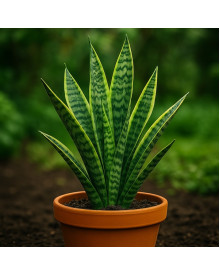
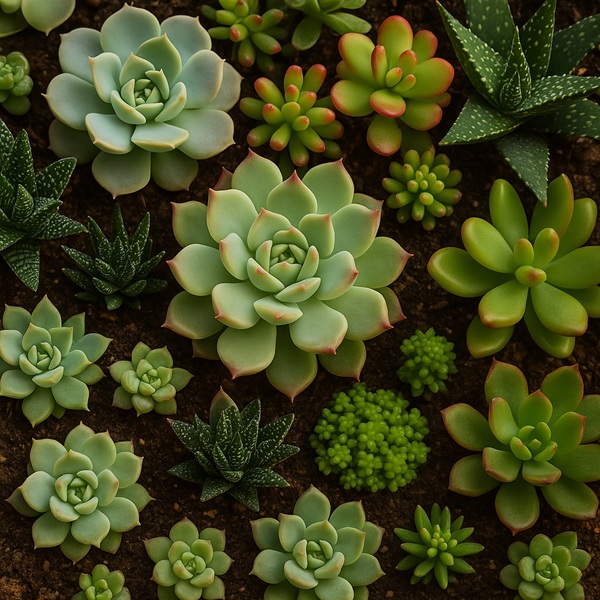
Succulents include such well-known plants as echeveria, aloe, kalanchoe, haworthia, sedum, crassula (money tree), agave, lithops, stapelias, and cacti. All of them differ in shape, color, and structure, but they share one common ability: to use moisture sparingly. In Ukraine, especially in regions with dry summers and insufficient air humidity, such as the southern and central areas, growing succulents has become a real find. They can be grown both indoors and outdoors — in containers, rock gardens, and alpine slides. Moreover, succulents fit perfectly into modern interior styles, from minimalism to eco-style, so they are widely used not only at home, but also in offices, cafés, coworking spaces, and design studios.
Today, interest in collecting rare succulents is growing in Ukraine. The market offers both popular varieties and exotic species that can be purchased from domestic and foreign breeders. Since succulents reproduce easily, many Ukrainians turn their hobby into a small business by growing plants for sale. In addition, these plants have another advantage: they purify the air, and some species, such as aloe and kalanchoe, are known for their medicinal properties.
Succulents are true survival experts, but that does not mean they need no basic care. It is worth remembering that proper conditions mean not only beauty, but also the plant’s health and lifespan. In Ukrainian conditions, where summers can be hot and dry while winters are cold and dark, it is especially important to organize the right microclimate both indoors and outdoors.
Lighting:
Succulents love bright, diffused light, and many of them can tolerate direct sunlight;
The best place is a southern or eastern windowsill. In very hot weather, especially in southern Ukraine, it is better to provide shade during midday hours;
When there is not enough light, in winter or on northern windows, plants stretch out, lose their bright color, and become fragile;
During the cold season, it is useful to use grow lights, especially in western and northern Ukraine.
Temperature:
In summer: ideally +20 to +28 °C, though some species can tolerate up to +35 °C;
In winter: it is desirable to keep them dormant at +10 to +15 °C, especially cacti and echeverias;
Sharp temperature fluctuations, such as from radiators and cold windowsills, are undesirable.
Air humidity:
Succulents do not require increased humidity — the dry air of Ukrainian apartments suits them perfectly;
Spraying is not recommended, as it may cause rot;
It is important to ensure ventilation, but avoid drafts in winter.
One of the most important factors in growing succulents in Ukraine is choosing the right substrate. Succulents absolutely do not tolerate stagnant moisture around their roots, which often happens in apartments with high humidity or with improper watering. This is especially relevant in autumn and winter, when evaporation decreases and the roots remain in an overly wet environment. That is why soil for succulents must be as light, loose, and well-drained as possible.
The composition of an ideal substrate:
2 parts leaf soil or universal potting mix;
1 part coarse washed sand;
1 part perlite, vermiculite, or fine pebbles;
1–2 spoonfuls of charcoal to prevent rot;
For cacti, crushed brick or zeolite can also be added.
You can use a ready-made soil mix for cacti and succulents, but it is still best to make it even lighter by adding sand or fine expanded clay. A drainage layer of 2–3 cm of expanded clay, gravel, or broken brick should always be placed at the bottom of the pot. The pot itself must have drainage holes. Clay or ceramic containers are the best choice because they “breathe” and do not retain excess moisture.
Planting technique:
Prepare the pot and substrate.
Lay down the drainage layer.
Add part of the soil and place the plant.
Carefully cover the roots without burying the rosette too deeply, especially in echeverias.
Do not water for 2–3 days after planting to avoid rot.
Spring and summer are the best times for planting and repotting. In autumn, it is better to avoid this, especially before cold weather sets in, so as not to stress the plant. In regions of Ukraine with high air humidity, such as the Carpathians and the Lviv region, it is important to ensure good ventilation and substrate sterility, since fungal diseases may appear even without excess moisture.
Watering is one of the key aspects of succulent care. Overwatering is the main cause of rot, especially among beginners. In Ukrainian conditions, where summers are often hot and winters bring low temperatures and a lack of light, it is very important to adapt the watering schedule to the season. At the same time, it is worth remembering that succulents tolerate drought better than excess moisture.
General watering rules:
Water only after the soil has dried out completely;
In summer, approximately once every 7–10 days, more often in very hot weather;
In spring and autumn, once every 2–3 weeks;
In winter, very rarely, once every 4–5 weeks, or not at all if the plant is dormant;
The water should be soft, settled, and at room temperature;
Do not pour water into the center of the rosette, as this may cause rot, especially in echeverias, haworthias, and lithops.
Typical mistakes:
Watering without checking the condition of the soil;
Leaving water standing in the saucer;
Watering with cold or hard water;
Watering on cloudy or cold days.
Feeding:
Feed only during the active growth period, from April to August;
Once a month, use fertilizer for cacti and succulents with a low nitrogen content;
Do not fertilize in autumn or winter;
Too much nitrogen causes stretching, soft tissues, and loss of decorative appeal.
If these rules are followed, succulents will keep their compact shape, bright color, and decorative appearance throughout the year in Ukrainian conditions.
One of the main advantages of succulents is how easy they are to propagate, which makes it possible to expand a collection quickly or share plants with friends. In Ukraine, where the climate allows succulents to be grown both indoors and outdoors, in containers on balconies, terraces, and flower beds, propagation is a simple and enjoyable process. Almost all common species form roots easily with minimal care.
Main propagation methods:
Leaf cuttings (echeveria, kalanchoe, crassula):
✦ A healthy leaf is carefully removed and left to dry for 1–3 days.
✦ It is then placed on the surface of a moist substrate without burying it.
✦ After a few days, roots appear, followed later by a new rosette.
Separating offsets:
✦ Many succulents, such as aloe, echeveria, and haworthia, produce side shoots or offsets.
✦ These are separated and planted in their own pot.
✦ Roots form within 2–3 weeks.
Stem cuttings (sedums, kalanchoe, some crassulas):
✦ A stem 5–10 cm long is cut and left to dry for 1–2 days.
✦ It is planted in a light substrate, and watering begins only after a few days.
Propagation by seed:
✦ This method requires more effort: sterile soil, warmth, and stable humidity.
✦ It is used more often for cacti or rare species.
The best time for propagation in Ukraine is spring and summer. It is important to use clean tools, disinfect the cut area, and avoid watering immediately after planting. These rules ensure a high survival rate. Thanks to the simplicity of the process, many Ukrainians not only enjoy breeding succulents, but also successfully sell them through social media, flower exhibitions, and local markets.
Despite their hardiness, succulents can still suffer from certain pests and diseases, especially in conditions of excessive moisture, poor ventilation, or infections brought in with new plants. The most dangerous problem is root rot, and many plants are lost every year because of it. In humid regions of Ukraine, particularly in the west and north, it is important to detect and eliminate the first symptoms in time.
Most common pests:
Mealybug: a white, cotton-like coating in the leaf axils.
✦ Treatment: alcohol solution, Fitoverm, Aktara.
Spider mite: tiny dots on the leaves and barely visible webbing.
✦ Increased humidity, soapy solution, Actellic.
Scale insect: dense brown formations on the leaves.
✦ Manual removal and treatment with oily or contact insecticides.
Diseases:
Root rot: darkening and softening of the base, loss of firmness.
✦ Remove damaged parts and repot into dry, sterile soil.
Fusarium and fungal spots: appear when air or moisture stagnates.
✦ Treat with fungicides such as Fundazol or Previkur and improve ventilation.
Decorative uses:
Interiors: they look excellent in concrete, clay, and wooden planters;
Terrariums: open or closed glass arrangements for homes or offices;
Balconies and terraces: in containers, with light shading;
Landscape design: alpine gardens, dry flower beds, and rockeries in southern regions;
Vertical gardens: modular panels with different succulent species.
Succulents are not just a trend. They create a sense of harmony, do not require excessive care, have a unique appearance, and are perfectly adapted to Ukrainian realities. They are an excellent choice for a home, summer house, office, terrace, or even a small business. They bring usefulness, beauty, and genuine enjoyment from caring for them.