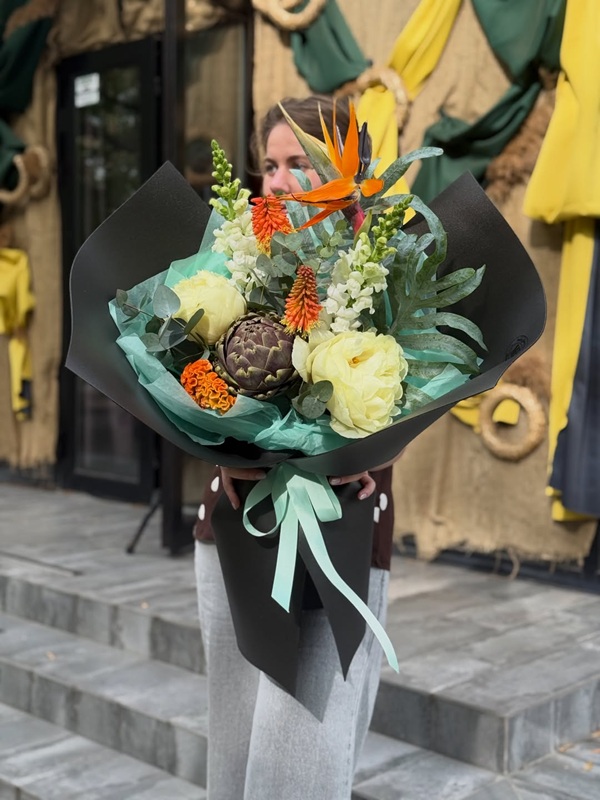
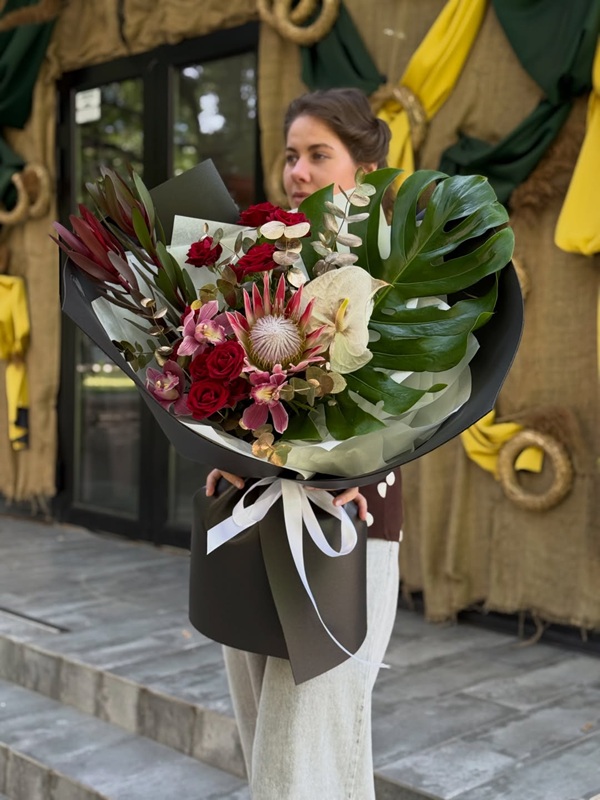
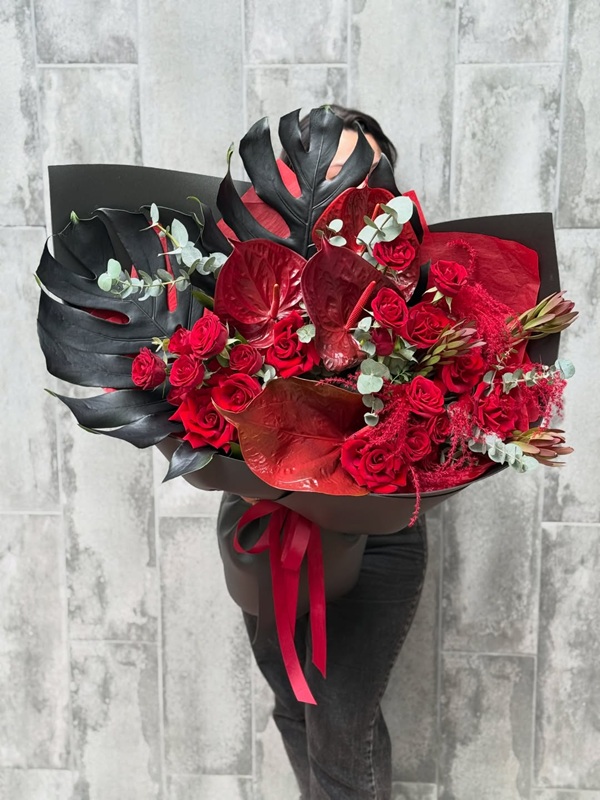
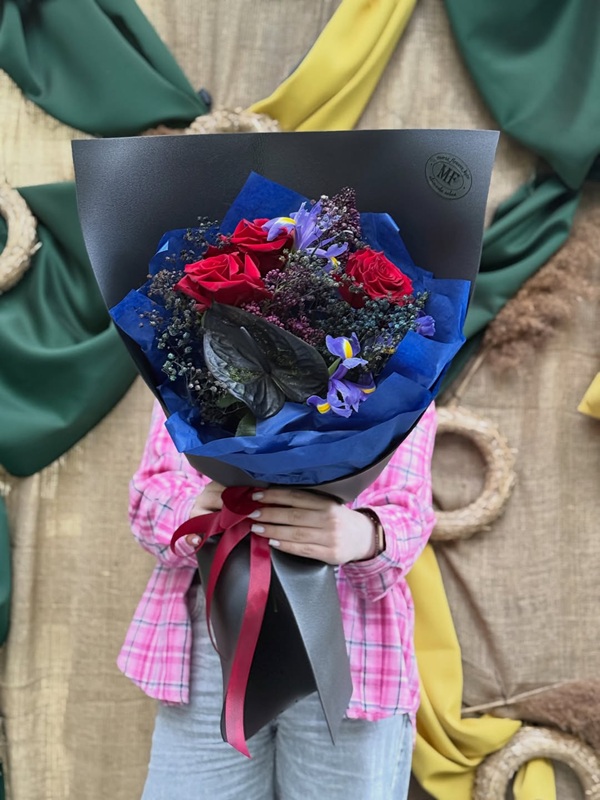
Cut flowers are a wonderful way to decorate a home, create a cozy atmosphere, or make a pleasant gift for loved ones. However, without proper care, a bouquet can quickly wilt, losing its freshness and attractiveness. If you want your roses, tulips, lilies, or chrysanthemums to delight the eye for as long as possible, it is important to follow a few simple but effective rules. In this article, Marta Flowers explains how to care for flowers in a vase properly, which tricks can help extend their life, and which mistakes should be avoided.
After receiving a bouquet, it is important to prepare it for the vase right away. First, remove the wrapping and carefully inspect the flowers. If there are any dry or damaged leaves on the stems, it is best to remove them, as they may rot in the water and reduce its quality. Next, the stems need to be trimmed correctly. It is recommended to cut them at a 45° angle, as this increases the surface area for water absorption. It is best to use a sharp knife or pruning shears, since scissors can crush the vessels and reduce the flow of moisture.
Some flowers, such as roses and lilac, have dense, woody stems. For them, a splitting technique works well: after cutting, the stem is slightly slit and gently crushed to improve water absorption. Plants with soft stems, such as tulips and hyacinths, need the cut refreshed every 1–2 days. Lilies, gerberas, and flowers with fuzzy stems should only be placed halfway into the water to prevent rotting.
One of the most common mistakes is pouring cold tap water into the vase. Freshly cut flowers absorb settled water at room temperature best. If the flowers have been without water for a long time, they can be placed in warm water for the first 1–2 hours so they can rehydrate more quickly. The exception is spring flowers such as tulips and daffodils, which prefer cool water.
It is very important to change the water in the vase every day, or at least every other day. This prevents the growth of bacteria, which clog the stems and cause the flowers to wilt. You can also add special flower food or simple household solutions:
Sugar (1 tsp per 1 liter of water) nourishes the flowers with glucose and prolongs freshness.
Aspirin (1 tablet per 2 liters of water) acidifies the water and helps prevent bacterial growth.
Vinegar (1 tsp per 1 liter of water) helps keep the water clear and supports the stems.
Activated charcoal purifies the water from harmful microorganisms.
These additions help flowers stay fresh longer and preserve their rich colors.
Another important factor is where the vase is placed. Many people put bouquets on a windowsill, but this can be a mistake. Direct sunlight speeds up moisture evaporation, causing flowers to wilt faster. It is also not recommended to place flowers near radiators, heaters, air conditioners, or in drafty areas. The ideal temperature for keeping cut flowers fresh is between +15°C and +20°C.
Flowers should also be kept away from fruit. Apples, bananas, and pears release ethylene, a gas that speeds up the aging process of plants. Because of this, flowers can lose freshness quickly even if they are standing in clean water. So do not place a vase near a fruit bowl.
If you have a bouquet made up of different kinds of flowers, it is important to consider their compatibility. Some plants release substances that negatively affect neighboring flowers. For example:
Daffodils release a sap that is toxic to other flowers. Before placing them in a shared vase, let them stand in separate water for 2–3 hours.
Lilies have a strong fragrance that may speed up the wilting of other flowers.
Roses are best placed separately, since they are sensitive to the secretions of other plants.
Carnations and chrysanthemums combine well and stay fresh together for a long time.
To make a bouquet last as long as possible, choose flowers with similar water and temperature needs.
Besides the basic rules, there are a few additional tricks that can help flowers last longer in a vase:
Misting. Lightly spraying the petals helps keep the bouquet fresh, especially in hot weather.
Cooling. At night, flowers can be moved to a cool place, such as a balcony or a refrigerator at +4 to +6°C.
Maintaining shape. If the flowers begin to wilt, they can be submerged in a tub of cool water for 30–60 minutes.
Removing wilted blooms. If one flower starts to fade, it is better to remove it, as this slows the aging of the others.
By following these simple recommendations from Marta Flowers, you will be able to enjoy the beauty of cut flowers for much longer. Whether it is a romantic bouquet of roses, spring tulips, or exotic orchids, proper care will extend their life and preserve their freshness. Order the freshest flowers with delivery from Marta Flowers, and let your bouquet bring you joy for as long as possible.