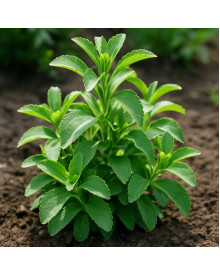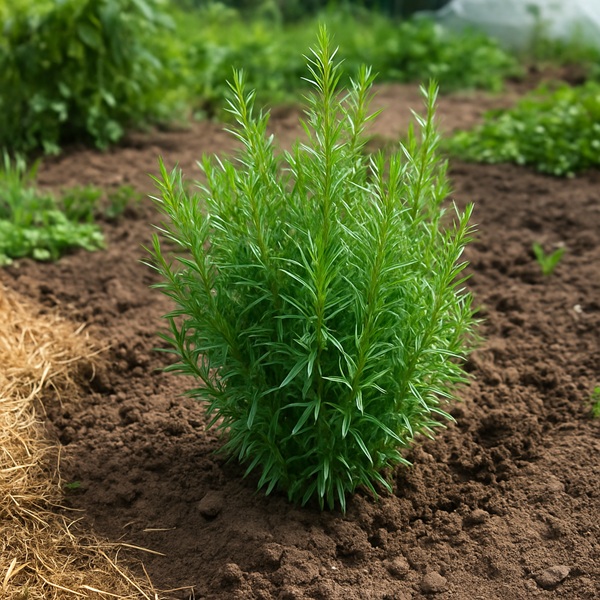
Tarragon, or estragon (Artemisia dracunculus), is a perennial herbaceous plant from the Aster family that has gained wide popularity thanks to its spicy aroma and flavor. In Ukrainian folk medicine and cuisine, tarragon is valued for its refreshing properties, its ability to stimulate appetite, improve digestion, and even normalize metabolism. The plant’s leaves contain essential oils, flavonoids, carotenoids, and vitamins C and A, so it is used not only as a seasoning but also as a component of natural medicinal infusions and decoctions. In traditional culture, tarragon is added to marinades, pickles, and drinks — including the well-known “Tarhun” beverage — and is also used to flavor vinegar and oil.
In Ukraine, tarragon is grown mainly in the southern and central regions, where the climate is most favorable. At the same time, thanks to its resistance to moderate frosts and drought, it is also successfully cultivated in northern regions. There are two main types of tarragon: French tarragon, which is more aromatic and most often used in cooking, and Russian tarragon, which is less aromatic but more frost-hardy. For household plots in Ukraine, French tarragon is usually preferred because of its pronounced flavor and decorative appeal.
The plant has a perennial growth cycle and can remain in one place for 7–10 years with proper care and periodic rejuvenation of the clump. Thanks to its strong root system, tarragon spreads actively and forms dense growth. However, over time the clumps may become bare and lose some of their aromatic qualities, so dividing them every 4–5 years is recommended. By late April, the young shoots are already suitable for use, and throughout the summer the greenery can be cut 3–4 times, making tarragon a productive and worthwhile crop.
For successful tarragon cultivation in Ukrainian conditions, the key factor is choosing the right location. This is a light-loving plant that needs at least 6–8 hours of direct sun every day. Shade has a negative effect on both aroma and growth: the shoots become elongated, the leaves lose their richness of flavor, and the overall productivity of the clump decreases. An ideal site is on the south or southeast side, protected from strong winds, with good air circulation.
The soil for tarragon should be light, well drained, and neutral to slightly alkaline. Loams and sandy loams with a high humus content are best suited. Heavy clay areas require prior improvement — adding sand, compost, and lime if the acidity is too high. Tarragon does not tolerate stagnant water: excessive moisture leads to root rot and plant death, especially during winter. To avoid such problems, it is advisable to create raised beds or elevated planting areas.
In autumn before planting, the soil is dug to a depth of 25–30 cm, weed rhizomes are removed, and organic matter such as well-rotted manure or compost is added, along with mineral fertilizers — superphosphate and potassium salt. In spring, 1–2 weeks before planting, the plot is loosened and harrowed. Tarragon is planted either from seed or vegetatively: by dividing the clump, by cuttings, or by root suckers. In Ukraine, vegetative methods are preferred, since the seeds of cultivated varieties often either fail to germinate or do not preserve varietal traits. In spring planting, cuttings or divided clumps are planted 40–50 cm apart, taking future spreading into account.
The best time for vegetative planting of tarragon is from mid-April to mid-May, when the soil has warmed sufficiently but still retains spring moisture. It is important that after planting cuttings or divided plants, the weather becomes warm but not hot — otherwise the young plants will experience stress. During planting, the roots should be fully covered with soil, the ground around them should be firmed, and the plants should be watered generously. If the site is open to both sun and wind, it is worth shading the plants for the first few days with agrotextile or temporary covers so they can root more successfully.
The first weeks after planting are the most critical period: regular watering is needed every 2–3 days depending on the weather, along with loosening of the soil and weed removal. About a month later, once the plants have adapted, the watering frequency can be reduced. At the same time, the soil must not be allowed to dry out, especially in the first two years. Tarragon does not like excessive moisture, but even short-term drought reduces the accumulation of essential oils, weakening its aroma. The ideal is to maintain moderate soil moisture at a depth of 10–15 cm.
At the beginning of the growing season, nitrogen fertilizers such as diluted manure infusion or urea are used to stimulate green mass growth. However, too much nitrogen can negatively affect the aroma, so moderation is important. From June to August, it is better to use complex mineral fertilizers with more phosphorus and potassium. During this period, the plant actively forms greenery and prepares to flower. Flowering is not always desirable, especially if fresh greens are the main goal of cultivation, because flavor declines during budding. It is recommended to pinch the tops of the shoots to prevent flower stalk formation.
Under Ukrainian conditions, the most reliable way to propagate tarragon remains vegetative propagation — it is exactly this method that preserves all varietal features, especially aromatic and flavor qualities. The most common method is dividing the clump, which is done in spring or autumn. The clump is carefully dug up, cleaned of soil, and cut with a sharp knife or pruners into sections so that each part has a well-developed root system and 2–3 shoots. The cut surfaces should be treated with crushed charcoal or a weak potassium permanganate solution to prevent infection. The separated parts are planted immediately into the prepared bed, without allowing the roots to dry out.
Cuttings are taken from May to July. Young shoots 10–15 cm long with 2–3 internodes are cut, the lower leaves are removed, and the cuttings are treated with a rooting stimulant. They are then planted into a moist, loose substrate made of peat and sand, covered with film or cut plastic bottles, and kept in a shaded place until rooting. After 2–3 weeks, new growth appears — a signal that they can be transplanted to a permanent location. The rooting rate with this method is high, especially if stable moisture is maintained and the cuttings are protected from direct sun.
Root suckers are another effective method. In spring, young shoots often appear near the base of the main clump, growing from the roots. These are carefully separated together with part of the root and transplanted separately. Such plants establish well and already produce a full green harvest the following season. This method is especially convenient for renewing a bed without digging up the old clump. It suits even busy or inexperienced gardeners, since it requires little effort — only maintaining soil moisture during the first weeks after transplanting.
Despite its low-maintenance nature, tarragon grows better and gives higher yields when it receives regular care. From April to September, the soil should be loosened periodically, especially after rain or watering, in order to improve aeration and prevent crust formation. Weed removal is also essential: weeds not only compete for water and nutrients, but may also carry infections. Mulching with peat, straw, or dry grass helps retain moisture, suppresses weeds, and improves soil structure.
The greatest danger to tarragon comes during periods of high humidity and sharp temperature fluctuations. At such times, the risk of fungal diseases rises: powdery mildew, rust, and fusarium. The first signs are pale or drying leaves, coating on shoots, and loss of aroma. For prevention, plants can be sprayed with garlic infusion, conifer decoction, or a weak potassium permanganate solution. In cases of severe infection, approved fungicides are used with strict adherence to dosage. Tarragon is rarely damaged by pests, but young plantings may attract slugs, aphids, or caterpillars. In such cases, ash solution, wormwood infusion, or tobacco infusion are effective, and if necessary, biological products or insecticides may be used.
Before winter, sanitary pruning is carried out: the above-ground part is cut back to a height of 5–7 cm. This helps the plant overwinter better. In the northern and central regions of Ukraine, it is advisable to mulch plants with peat or spruce branches, especially in winters with little snow. In the southern regions, extra cover is usually not needed. Every 3–4 years, the clumps are rejuvenated: old shoots are removed, leaving only young growth, or the planting is completely renewed. This preserves productivity and decorative value and reduces the risk of pathogens building up in the soil.
The first full harvest of greens is made in late May to early June, when the shoots reach 20–30 cm in length. Cutting should preferably be done in the morning, after the dew has dried, in dry weather — this is when the leaves contain the greatest amount of essential oils. Further cuts can be made every 4–5 weeks until September. The final harvest is done 3–4 weeks before stable cold weather so the plant is not weakened before wintering. To obtain tender, aromatic greens, flowering should be prevented: buds should be removed promptly.
The harvested shoots are used fresh or preserved. For drying, they are hung in the shade in a well-ventilated place. Once dry, the leaves are crushed and stored in tightly closed glass jars for up to one year. Tarragon can also be frozen: washed shoots are dried, chopped, and packed into containers or bags. This method preserves the aroma better than drying. Another option is salting: fresh leaves are layered with salt in jars. The result is a concentrated seasoning for marinades and sauces.
In Ukrainian cuisine, tarragon is added to meat, especially lamb and pork, and used in sauerkraut, marinades, and pickles. A fragrant syrup is made from fresh leaves, which is used to prepare homemade lemonade and the famous green “Tarhun” drink. In folk medicine, tarragon is used to improve digestion, as a diuretic and mild laxative, and for insomnia and stress. Thanks to its antiseptic and antifungal properties, leaf decoctions are used as gargles for throat and mouth conditions. In this way, tarragon is not just a spice, but a true source of benefits that enriches the diet and supports the body.