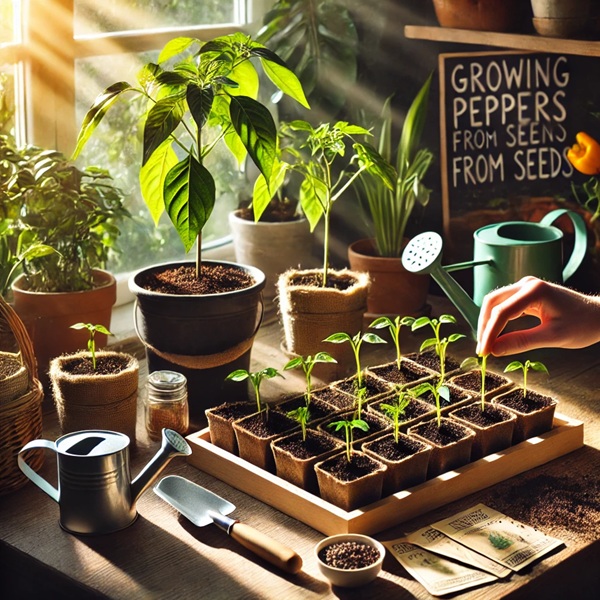
Growing peppers from seeds at home is not only an exciting hobby, but also a wonderful way to get fresh, fragrant fruits right from your windowsill. This process requires patience and attention to detail, but the result fully justifies the effort. Pepper is a heat-loving plant that, with proper care, will delight you not only with its attractive appearance, but also with delicious fruits. In this article, we will look in detail at all the stages of growing peppers from seeds: from choosing planting material to caring for mature plants.
The first step toward successfully growing peppers is choosing the right seeds. There are many pepper varieties, each with its own characteristics. If you are a beginner, it is best to start with reliable varieties that are easier to grow at home. These include sweet varieties such as California Wonder, Golden Miracle, or Big Mama. If you prefer heat, pay attention to chili, jalapeño, or cayenne pepper varieties.
When choosing seeds, pay attention to the expiration date. Expired seeds have low germination rates. It is best to buy seeds from trusted producers, for example in specialized stores or from reliable suppliers. The Marta Flowers store offers a wide range of quality pepper seeds tested for freshness.
Before planting, the seeds must be prepared properly. Soaking is one of the key stages of seed preparation. To do this, simply place the seeds in warm water for 12–24 hours. This process helps speed up germination and activates the internal processes in the seed. Some gardeners use a potassium permanganate solution to disinfect the seeds, which helps protect them from fungal diseases.
After soaking, you can move on to hardening the seeds. For this, the seeds are placed in the refrigerator for 1–2 days. This method increases the future plants’ resistance to temperature fluctuations, which is especially important when growing them at home.
For peppers to grow and develop well, they need quality soil. A light, nutritious, and well-drained substrate is considered ideal for planting. You can buy ready-made vegetable soil from Marta Flowers or prepare the mixture yourself. To do this, mix garden soil with humus, peat, and river sand in equal proportions.
Before sowing, the soil must be disinfected. This can be done by pouring boiling water over it or treating it with a weak potassium permanganate solution. Such treatment destroys possible pathogens and provides a healthy start for the plants.
The seeds are sown in small containers or special seedling trays. The sowing depth should be about 1 cm. After planting, the soil is lightly moistened with a spray bottle so the seeds are not washed out. The containers are then covered with film or glass to create a greenhouse effect and placed in a warm location with a temperature of about 25–28 degrees Celsius.
Seedlings usually appear within 7–14 days. After the first sprouts emerge, the cover is removed, and the containers are moved to a well-lit place. If natural light is insufficient, grow lights should be used. This is especially important in winter or on cloudy days, when daylight hours are too short for full plant development.
After the first seedlings appear, the plants require special care. One of the most important aspects is proper watering. Peppers do not tolerate excess moisture, so the soil should be moderately moist. Drying out of the soil can slow growth, while excessive watering can lead to root rot. Water the seedlings with soft water at room temperature, avoiding getting water on the leaves.
Feeding plays an important role in developing healthy plants. The first feeding is done two weeks after the seedlings appear. Fertilizers with a high nitrogen content are suitable for this, as they encourage active green growth. As the plants grow, it is better to use complex fertilizers containing potassium and phosphorus to strengthen the root system and form ovaries.
When the seedlings develop 2–3 true leaves, they are pricked out — transplanted into separate pots. This procedure helps strengthen the root system and gives the plants more space to grow. The seedlings are transplanted carefully so as not to damage the young roots.
After pricking out, the plants need regular watering, feeding, and good lighting. If the peppers are growing on a windowsill, it is important to turn the pots regularly so the plants receive light evenly and do not lean to one side.
When the seedlings grow larger and form 5–6 true leaves, they can be transplanted into larger containers for permanent growing. The pot size should be at least 5 liters for each plant. A drainage layer of expanded clay or fine gravel must be placed at the bottom of the container to prevent stagnant water.
The soil for transplanting should be fertile and light. You can use the same mixture as for sowing, additionally enriching it with mineral fertilizers. After transplanting, the plants are watered well and placed in the brightest spot in the house. Peppers love warmth and light, so a south- or southeast-facing windowsill is ideal.
Caring for mature plants includes regular watering, feeding, and pruning. Watering should be done as the top layer of soil dries out. It is important not to let the soil dry out completely, especially during flowering and fruit formation.
Mature plants are fed every two weeks, alternating organic and mineral fertilizers. To stimulate flowering, fertilizers with a higher content of potassium and phosphorus can be used.
Pruning peppers helps shape the bush and stimulates the formation of new shoots. Remove weak and overcrowding branches, as well as yellowed leaves. This not only gives the plant a neat appearance, but also promotes better fruiting.
When growing peppers at home, you may encounter various pests and diseases. The most common pests are aphids, spider mites, and whiteflies. At the first signs of infestation, action should be taken immediately. The simplest method is treating the plants with a soap solution. In cases of severe infestation, you can use special insecticides that are safe for home use.
Fungal diseases such as root rot or powdery mildew can also become a problem when growing peppers. The cause of such diseases is often excessive watering or poor ventilation. To avoid these issues, follow the watering schedule and air out the room regularly.
Another common problem is bud drop. This can happen because of sudden temperature changes, lack of light, or nutrient deficiency. To avoid this, provide the plant with a stable temperature, extra lighting, and regular fertilization.
Growing peppers from seeds at home is an exciting and rewarding process that requires attention and care. But with the right approach, you can not only decorate your home with a beautiful plant, but also enjoy tasty and healthy fruits. The Marta Flowers store offers everything needed for successful pepper growing: quality seeds, nutritious soils, and fertilizers. Let your home-grown plant become a source of joy and inspiration.