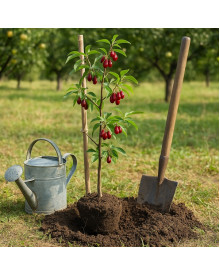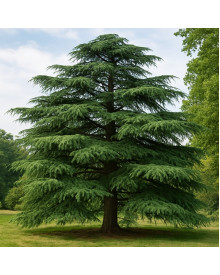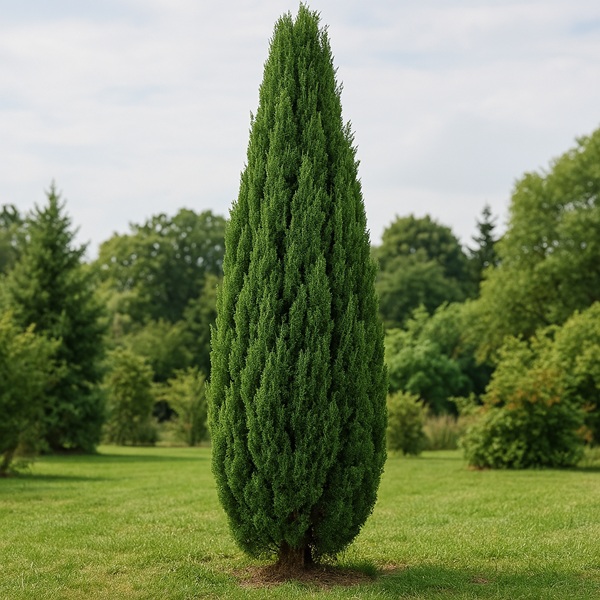
Cypress (Cupressus) is an evergreen coniferous tree that reaches a large size in its natural habitat and can live for several hundred years. In Ukraine, this plant is most often grown as an ornamental crop — in the south, in central regions, and also in containers as balcony or indoor greenery. Although the natural range of cypress is the Mediterranean, with proper cultivation practices it grows very well in a temperate climate too, especially if you choose a frost-resistant species or variety such as Lawson cypress or Atlantic white cedar (Chamaecyparis).
One of the main conditions for successful cultivation is choosing the right location. Cypress loves light, but under scorching sun, especially in summer in southern Ukraine, it needs slight shading. In regions with mild winters, it can be planted in open ground, while in colder areas container growing is preferred, with the option of moving it for the winter into a cool but bright room. Cypress does not tolerate drafts, so sites with constant winds are unsuitable. The soil should be loose, well-drained, slightly acidic or neutral (pH 6.0–7.0), with no stagnant moisture. On heavy clay soils, drainage must be arranged and sand or perlite should be added.
The best regions for growing it in open ground are Zakarpattia, the south of Odesa region, the southern part of Mykolaiv and Kherson regions, as well as the coast of Crimea. In other regions, container growing with mandatory winter protection is recommended. Cypress does not tolerate transplanting well, especially at a mature age, so when planting in open ground it is important to choose a permanent place right away, taking its future growth into account. Thanks to its ornamental qualities, cypress is widely used in landscape design: for creating hedges, alleys, as a specimen plant, or in conifer compositions. Some varieties have a narrow columnar shape, while others are more spreading, and this should be considered during planning. Needle color varies from bright green to bluish-gray and even golden.
Cypress is planted in Ukraine either in spring, from late March to mid-May, or in autumn, in September to early October, depending on the region and growing method. Spring planting is considered more reliable for open ground, especially in central regions where there is a risk of severe winter, because the plant has time to establish itself before the cold. With autumn planting, special care should be taken to protect young saplings. In containers, planting can be done all year round, although repotting is best carried out during dormancy — in late winter or early spring.
Step-by-step instructions for planting cypress in open ground:
Dig a planting hole about 60 cm deep and wide.
Place a drainage layer at the bottom using crushed stone, pebbles, or broken brick, at least 10–15 cm thick.
Prepare a soil mix of turf soil, leaf humus, peat, and sand in equal parts.
Place the sapling vertically, carefully spreading the roots.
Fill the hole with the prepared mix, lightly firming it.
The root collar should remain at ground level.
Water with 10–15 liters of settled water.
Mulch the root zone with bark, sawdust, or pine needles.
When growing in containers, it is important to choose the right pot — with drainage holes and a volume 2–3 times larger than the root system. There must be expanded clay or fine pebbles at the bottom, followed by a loose mix based on conifer soil, compost, and sand. Cypress does not tolerate compacted, heavy substrate that retains water. In open ground, spacing between plants should be maintained: 0.8–1 m for compact varieties and up to 2 m or more for tall ones. Young saplings should be shaded during the hottest hours for the first 1–2 years and protected from temperature fluctuations.
Cypress is a plant that needs moderate moisture and reacts badly both to drying out and to water stagnation. For that reason, the watering regime must be balanced. In open ground, especially in southern Ukraine, watering is done once or twice a week; in central regions, less often, depending on rainfall and soil type. In containers, it is important to maintain constant but not excessive moisture — the soil should not dry out, but it should not become waterlogged either. The best time for watering is morning or evening, using room-temperature water. The water should be soft, so it is best to use rainwater, filtered water, or water that has been left to stand for a day.
Feeding cypress is important during its active growth period, from April to August. In spring, nitrogen fertilizers are applied, such as urea or herbal infusion; in May–June, complex mineral fertilizers with micronutrients are used. From July onward, the focus shifts to phosphorus and potassium, which help shoots mature and strengthen the tree before winter. Feeding is done once every 3–4 weeks, always after watering. In containers, feeding is done more often, every 2–3 weeks, because the volume of soil is limited and is depleted quickly. In autumn, fertilizers are not applied so as not to stimulate new growth before the cold season.
Mulching is an essential practice when caring for cypress. It preserves moisture, stabilizes soil temperature, and suppresses weed growth. Bark, chopped pine needles, sawdust, and well-rotted compost are used as mulch. The layer should be 5–7 cm thick, but the mulch should not be placed directly against the trunk. In autumn, mulching protects the roots from freezing, especially in regions with unstable winters. In spring, the old mulch is removed and replaced with fresh material. Through regular watering, balanced feeding, and mulching, cypress adapts better to external conditions, develops actively, and retains its decorative appearance.
Although cypress grows slowly, it still requires periodic pruning, especially if it is grown as an ornamental plant on a private plot. The main types of pruning are sanitary and formative. Sanitary pruning is carried out in spring, before sap flow begins, or in autumn, after active growth has ended. During this process, dry, damaged, diseased, or frost-damaged branches are removed. It is important to use a sharp, disinfected tool so as not to injure the plant or introduce fungal infections.
Crown shaping is especially relevant for columnar or dwarf forms of cypress. To preserve an attractive shape, light pinching of young shoots is carried out. When growing a hedge or creating geometric shapes such as spirals, cones, or spheres, more intensive pruning is used, allowing control over both size and form. All cuts with a diameter of more than 0.5 cm should preferably be treated with garden pitch or fungicide-based pastes.
In container growing, pruning plays an even more important role: it helps keep the plant compact, preserves symmetry, and improves crown ventilation. Rotating the pot around its axis once every 1–2 weeks is especially useful so that the crown does not develop one-sidedly. Ornamental cypress varieties are often used in bonsai art, where special methods of branch shaping, tying, and pruning are applied. This approach requires patience, regular care, and a deep understanding of the plant’s physiology, but in return it makes it possible to create unique compositions that will decorate any interior or landscape.
Despite its general hardiness, cypress is sometimes affected by diseases or attacked by pests, especially when care conditions are disrupted — excessive moisture, poor ventilation, or overly dense planting. The most common diseases are:
Root rot — shows up as wilting and discoloration of the needles. The cause is stagnant moisture or heavy soil unsuitable for the roots.
Phytophthora — a dangerous fungal disease that quickly affects the root collar and causes the plant to die back.
Mold and fungal spotting — appear in conditions of high humidity and poor lighting.
Scale insects, spider mites, and aphids — pests that feed on the sap of needles and shoots, slowing growth and causing deformities.
To prevent rot, it is necessary to ensure proper drainage and avoid excessive watering, especially during cool periods. When signs of damage appear, the cypress is taken out, the root system is washed, affected areas are cut off, treated with fungicides such as Previcur or Fundazol, and replanted into a new, disinfected substrate. To prevent fungal diseases, treatments with copper sulfate solutions or biofungicides based on Trichoderma are used.
For pest control, spraying with insecticides such as Aktara, Fitoverm, or Calypso is effective, as well as using soap solution and infusions of wormwood, garlic, or onion. Special attention should be paid to indoor or greenhouse cypresses, since conditions there often provoke disease development because of stagnant air. Regular ventilation and spraying with immunity stimulants such as Epin or Zircon increase the plants’ resistance to stress and infections.
One of the main tasks when growing cypress in the Ukrainian climate is ensuring proper wintering. In southern regions with mild winters, plants can overwinter in open ground provided they receive light protection — mulching and wrapping the trunk with agrofabric or burlap. In the central and northern parts of the country, it is safer to grow cypress in containers, which allows it to be moved in winter to a bright, cool room with a temperature of +5 to +12°C. It is strongly not recommended to keep cypress in a room with central heating, because overly dry air damages the needles.
Transplanting cypress in open ground is done only in extreme cases, since the plant does not tolerate disturbance of the root ball well. Container-grown cypresses are repotted every 2–3 years using the transshipment method, with partial replacement of the substrate. After repotting, watering should be limited and light shading should be provided for 2–3 weeks so the plant can adapt. All such procedures are best carried out in spring.
Cypress is an exceptionally decorative and versatile plant for landscaping. It is used as a specimen plant, in avenue plantings, hedges, and mixed borders. Compact varieties are ideal for rock gardens, Japanese gardens, and small plots. It combines beautifully with thuja, junipers, hydrangeas, and ornamental grasses. In containers, cypress decorates entrance areas, balconies, terraces, and winter gardens. Thanks to its refined appearance and vertical accent, it visually elongates space and adds structure and noble geometry to compositions.