Spinach: Planting, Growing, and Care | Top MF Tips
Views: 11480
Author
Йовенко Александр
Published Date
28 Apr 2025
Reading Time
Comments
0
Liked
11
Disliked
0
## Biological Characteristics of Spinach and Its Prospects in Ukraine
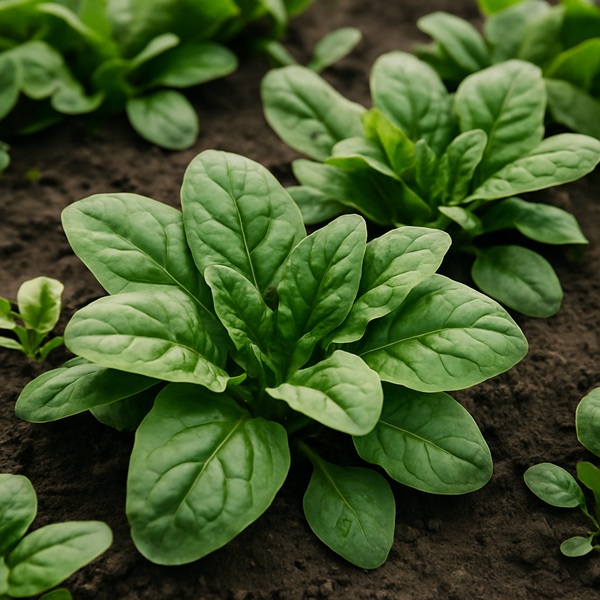
Spinach (*Spinacia oleracea*) is one of the few crops that can be grown in open ground almost year-round in Ukraine. This cold-hardy vegetable crop is distinguished by rapid growth and a high content of vitamins (A, C, and B-group vitamins), iron, magnesium, and plant proteins. A key feature of spinach is its short growing period (from 35 to 60 days, depending on the variety), which makes it possible to plan several successive harvests during a single season.
Biologically, spinach is a long-day plant. When daylight exceeds 14–15 hours, it shifts to flowering (bolting), which reduces leaf quality. That is why the main spinach production period in Ukraine falls in spring and autumn, when the days are shorter and air temperatures are moderate.
In Ukraine, spinach is grown as:
an open-ground crop in home gardens;
an early spring crop in greenhouses;
a winter crop in the southern and central regions;
an industrial crop for processing (freezing, drying, and purée production).
For successful cultivation, it is important to take into account that spinach is extremely sensitive to temperature fluctuations and soil structure. The optimal seed germination temperature is +3 to +5°C, active growth takes place at +10 to +18°C, and at temperatures above +25°C the plant bolts quickly.
The most popular spinach varieties in Ukraine are:
**‘Victoria’** — ultra-early, resistant to low temperatures.
**‘Matador’** — a mid-season variety with a strong leaf rosette.
**‘Gigant’** — a late-maturing variety for autumn cultivation, resistant to bolting.
**‘New Zealand spinach’** — an alternative for summer plantings (heat-loving, less sensitive to day length).
## Site Selection and Soil Preparation for Spinach
Despite its apparent unpretentiousness, spinach has fairly high soil requirements. A properly prepared plot is the foundation for a high-quality harvest.
The main requirements are:
light or medium-textured soils;
good water permeability, with no stagnant water;
an optimal pH of 6.5–7.0 (slightly alkaline or neutral);
a high content of organic matter (humus).
Soil preparation:
In autumn, the plot is dug to a depth of 25–30 cm.
Apply 5–6 kg of humus or compost per 1 m².
Add superphosphate (40 g/m²) and potassium sulfate (30 g/m²).
In spring, before sowing, the soil is loosened and harrowed to level the surface.
Site selection:
For spring spinach, choose well-warmed areas.
Autumn spinach is best placed in locations protected from cold winds.
Crop rotation features:
Spinach should not be grown after beetroot or chard because of shared diseases (root rot).
The best preceding crops are potatoes, cabbage, and legumes.
Tip: on heavy soils with a high groundwater level, spinach is best grown on raised beds.
## Sowing Spinach: When and How to Sow It Properly in Ukraine
Spinach sowing technology directly depends on the purpose of cultivation: an early harvest, summer production, or an autumn crop.
**Spring sowing:**
In the southern regions — starting from late February under cover (agrofabric, greenhouses).
In central and northern regions — from mid-March, once the soil has thawed.
**Summer sowing:**
Late June to early July.
Grown in partial shade or under shade nets.
**Autumn sowing:**
October — to obtain winter spinach.
The seeds are sown into cold soil so they do not germinate before frost.
Sowing technique:
Seed depth — 1.5–2 cm.
Seeding rate — 2–3 g per 1 m² (for hand sowing) or 15–20 kg/ha (for mechanized sowing).
Distance between rows — 20–25 cm.
In industrial cultivation, band sowing with 45 cm row spacing is used.
Seed preparation:
Soaking in warm water for 10–12 hours to speed up emergence.
Dressing with a fungicide to reduce the risk of fungal diseases.
Important: spinach does not tolerate transplanting well, so it is sown directly in its permanent place.
## Spinach Care Technology: How to Achieve High Crop Quality
Proper spinach care is the basis not only for yield, but also for high product quality, especially if sale or processing is planned.
The main care practices are:
**Watering:** spinach needs regular moisture without allowing the soil to dry out. If water is lacking, the plants bolt quickly and lose market quality. On light soils, water 2–3 times a week; on loams, 1–2 times.
**Thinning:** this is a mandatory operation. If spinach is overcrowded, it does not form a full rosette. The first thinning is done at the 2–3 true leaf stage, leaving 8–10 cm between plants.
**Feeding:**
10–14 days after emergence — nitrogen feeding with a weak solution (10–15 g of ammonium nitrate per 10 liters of water).
If needed — a complete fertilizer with micronutrients to stimulate leaf mass growth.
**Mulching:**
In summer, it is advisable to mulch between the rows with straw, humus, or agrofabric. This reduces moisture evaporation and suppresses weed growth.
**Soil loosening:**
This is carried out 5–7 days after emergence and then every 10–14 days to improve root aeration.
Features of caring for winter spinach:
Autumn sowings are not watered after rooting.
With the onset of severe frosts, young plants are covered with light agrofabric for protection.
A key point: spinach is very sensitive to weeds, which reduce yields and promote the spread of diseases.
## Spinach Diseases and Pests in Ukraine: Diagnosis and Protection
Despite its general hardiness, spinach under Ukrainian conditions may suffer from specific diseases and pests.
The main spinach diseases are:
**Downy mildew (peronospora):** gray-yellow spots on the leaves, rapid wilting of plants, especially in damp weather.
**Fusarium wilt:** a fungal disease that leads to yellowing and death of the leaves.
**Root rot:** develops in heavy, waterlogged soils.
Prevention:
Use healthy seed material.
Follow crop rotation (return spinach to the same site no earlier than after 3–4 years).
Pre-sowing seed treatment with fungicides.
Ventilation of greenhouses when growing in protected cultivation.
The main pests are:
**Beet aphid:** sucks sap from the leaves, causing them to curl.
**Leaf miner fly:** larvae eat tissues inside the leaf.
**Wireworm:** damages the root system, especially in acidic soils.
Protection methods:
Biological products (*Bitoxibacillin*, *Fitoverm*) for early pest control.
In case of severe infestation — use of pyrethroid-based insecticides with strict adherence to the waiting period.
Tip: at the first signs of disease or pests, affected plants should be removed from the plot immediately and destroyed.
## Harvesting, Post-Harvest Handling, and Storage of Spinach
Spinach is harvested selectively, depending on the stage of plant development and the intended use. The optimal stage is a rosette with 5–7 developed leaves, 15–20 cm high.
Harvesting procedure:
It is done by hand or mechanically (in industrial plantings).
Leaves are cut early in the morning, in cool weather, to preserve juiciness.
The rosette is cut at the base with a sharp knife.
Post-harvest handling:
The leaves are quickly cooled to +2 to +4°C.
Damaged and yellowed leaves are removed.
They are packed into perforated bags or containers for transport.
Storage periods:
Fresh spinach keeps for up to 5–7 days in the refrigerator.
After blanching and freezing — up to 8–10 months at –18°C.
Common mistakes:
Drying out leads to loss of leaf quality.
Poor drying before packing encourages rot development.
Processing features:
For drying, spinach is chopped and dehydrated at 45–50°C.
For purée production, spinach is blanched and rubbed through a sieve.
Liked the article?
Tell us about it on social networks, let your friends discover the world of flowers for themselves.
Comments
Recommended articles
Saffron: Planting, Growing, and Care | Top MF Tips