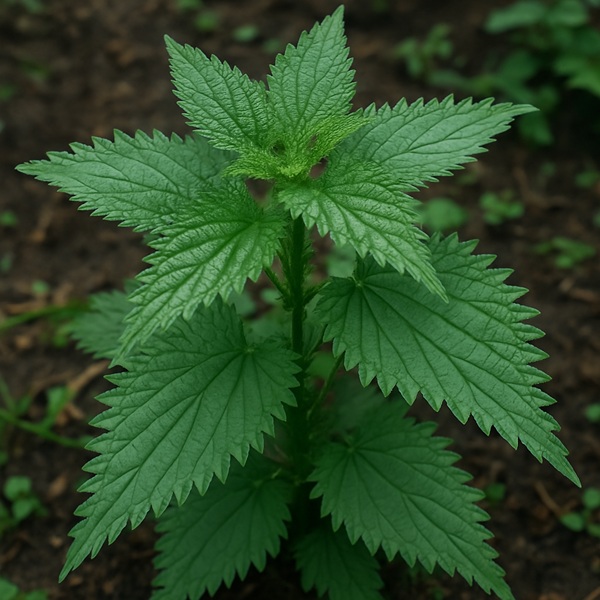
Nettle (Urtica dioica) is a plant many people consider a weed, although in reality it has extremely high biological and practical value. In Ukrainian folk traditions, nettle has been used for centuries: it is added to animal feed, made into infusions, used in herbal medicine, cooking, cosmetology, and also in gardening as an organic fertilizer. The most nutritious parts are the young shoots, which contain vitamins A, C, and K, chlorophyll, iron, calcium, magnesium, and even plant protein. In cooking, nettle is used for green borscht, pies, and salads, while in medicine it is used to cleanse the blood, improve metabolism, and strengthen the body overall.
Nettle is a perennial herbaceous plant with an impressive ability to recover and spread. In Ukraine, it is found almost everywhere — from Zakarpattia to Luhansk region — and thrives equally well in the Carpathians and in the steppe zone. In nature, it prefers moist, partially shaded places: along forest edges, near fences, and on riverbanks. However, it can absolutely be grown in managed conditions — in a vegetable garden, near a greenhouse, or even on a compost plot. This approach makes it possible to control the quality of the raw material, avoid contamination, and harvest it at the right time.
Why it is worth growing nettle intentionally instead of fighting it:
– It is undemanding, grows quickly, and does not require complicated care;
– It serves as an excellent green manure, mulch, and source of fertilizer;
– It increases biodiversity and attracts beneficial insects;
– It is an accessible raw material for herbal teas, infusions, decoctions, and culinary dishes.
Although nettle can grow almost anywhere, if you want to cultivate it specifically for harvesting leaves or making fertilizer, it is worth creating favorable conditions. In all regions of Ukraine — from Polissia to the Black Sea area — it can be grown without cover. The best place is a plot with light shade, access to moisture, and good air circulation. Ideally, this would be a northern slope, the edge of a plot near trees, or along a fence.
Optimal soils for nettle:
– Light loams or sandy loam soils with a neutral reaction (pH 6.0–7.0);
– A high content of organic matter (humus, compost);
– Good water permeability and moisture retention;
– No waterlogging or soil compaction.
Before planting, the plot is dug to a depth of 20–25 cm, adding 4–5 kg of humus per square meter. If the soil is acidic, ash or dolomite flour is added. On heavy and compacted soils, nettle suffers from rot and poor root development. It can survive even in difficult conditions, but to obtain medicinal or culinary raw material, careful cultivation is necessary.
Interestingly, nettle releases substances into the soil that suppress some weeds and repel pests. That is why it is often planted along beds or near greenhouses as a natural form of biological protection.
Nettle can be propagated in several ways: by seed, by dividing the rhizome, and by cuttings. The seed method is best suited for large-scale cultivation, although it takes more time. Division is the most reliable option for cultivated nettle if you want to preserve its characteristics.
Propagation by seed:
– Sow in spring (April) or before winter (October);
– Stratification in the refrigerator for 5–7 days improves germination;
– Sowing depth is 1–1.5 cm, with 25–30 cm between rows;
– The sowing area should be well moistened, followed by mulching with peat or humus.
Division of the clump:
– The best time is spring (March–April) or early autumn (September);
– The mature plant is dug up, and the rhizome is divided into 2–4 parts with shoots;
– The divisions are planted in holes, watered generously, and mulched.
Cuttings:
– Done in May–June;
– Use green shoots 10–15 cm long with several nodes;
– Root in a moist soil mix, in shade, under film.
During the first 2–3 weeks, it is important to maintain stable moisture so the young plants do not wilt. Within a month, nettle begins to build up mass rapidly, and regular harvesting can begin.
Nettle is an undemanding plant, but when grown intentionally it still needs minimal yet consistent care. This is especially important if you plan to use the greens for food, fertilizer preparation, or medicinal harvests. Success depends on timely watering, thinning overcrowded plantings, cutting during active growth, and preventing flowering if seeds are not needed.
Watering:
– Especially important at the beginning of growth and during hot weather;
– Water 1–2 times a week, depending on soil condition;
– Warm, settled water is best, in the morning or evening;
– Avoid excess moisture, as it may cause root rot.
Cutting and shaping:
– The first cutting is done 30–40 days after emergence or propagation;
– Regular cutting delays flowering and keeps the leaves tender;
– It stimulates the formation of side shoots, so the nettle thickens and renews itself.
Thinning:
– Done when sowing is too dense or the planting has overgrown;
– Leave 10–15 cm between plants;
– The removed plants can be used as green feed, mulch, or for infusions.
It is useful to mulch between rows with straw or cut grass: this preserves moisture and reduces weeds. Once a month, it is worth gently loosening the soil around the plants — no deeper than 4–5 cm — so as not to damage the shallow root system.
Nettle can be harvested throughout the growing season. The most nutritious and beneficial is the young greenery before flowering. This is usually May through the first half of June. It is best to cut the plant in the morning, after the dew has dried but before the heat sets in. It is advisable to work with gloves, using scissors or pruning shears to avoid skin irritation.
Basics of harvesting and drying:
– Cut the top 20–30 cm of shoots with 4–6 leaves;
– Repeated harvesting is possible every 2–3 weeks with proper care;
– Dry in the shade, spreading in a single layer on fabric or racks;
– Drying temperature should not exceed +40°C to preserve essential oils and vitamins.
Dried nettle is stored in cloth bags, glass jars, or paper packets in a dry, ventilated place. Shelf life is up to 12 months. Before use, the leaves are crushed. Dried nettle is added to teas, soups, as a seasoning, or as a feed supplement. It is suitable for people, poultry, rabbits, and goats.
Uses of fresh nettle:
– In food, like spinach: in borscht, salads, and casseroles;
– In cosmetics, as decoctions to strengthen hair and skin;
– In medicine, as teas and infusions for anemia, vitamin deficiency, and skin disorders.
Do not harvest nettle near roads, dumps, or industrial sites: it actively absorbs heavy metals and toxins from the soil.
Nettle is a true gift for organic farming. The most common way to use it is to make liquid fertilizer, the so-called “green ferment.” This is an ecological alternative to nitrogen fertilizers that enriches plants with nutrients and stimulates their immunity.
Recipe for nettle infusion:
– Fill a bucket or barrel halfway with chopped nettle;
– Add water to the top, plus ash or a handful of soil;
– Let it steep for 7–10 days in the shade, stirring daily;
– Strain and dilute at a ratio of 1:10 for watering.
This fertilizer is ideal for feeding tomatoes, cucumbers, cabbage, and peppers. It stimulates growth, improves leaf color, and increases yield. Nettle also speeds up compost maturation thanks to its high nitrogen content and biologically active substances.
Other advantages of growing nettle on the plot:
– It attracts beneficial insects such as ground beetles and ladybirds;
– It helps protect cabbage and cucumbers from pests when planted along the edges of beds;
– It is the basis for natural herbal sprays used against fungal diseases and chlorosis.
Nettle is not a weed, but a universal tool of organic gardening. It strengthens the soil, plants, and the human body, and helps build a self-sustaining agroecosystem. All it takes is changing the way you look at it — and it will reward you generously.