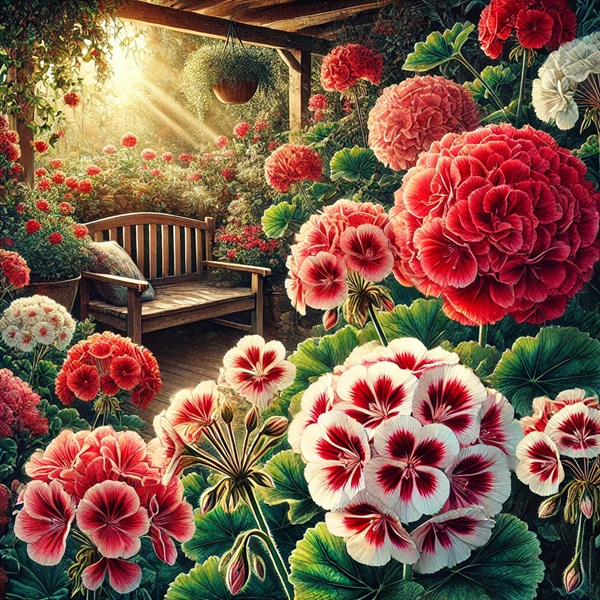
Mallows is the folk name for the plant botanists know as pelargonium (Pelargonium). For centuries, this flower has remained one of the favorites of both professional gardeners and lovers of houseplants. Mallows are distinguished by a wide variety of shapes, shades, and species, as well as ease of care, which makes them an ideal choice for any garden, balcony, or windowsill. Thanks to their drought resistance, abundant flowering, and ability to purify the air, pelargoniums are widely used not only for decorative purposes, but also for medicinal ones.
The origin of mallows is linked to South Africa, where they occur naturally. Over time, the flower spread throughout the world, gaining popularity in Europe and Asia. Depending on the variety, pelargoniums may differ not only in the shape and color of their inflorescences, but also in their scent, which repels insects and makes the air indoors fresh and pleasant.
There are more than 250 species of pelargonium, but for gardeners and flower growers, several main groups are especially popular:
Zonal pelargonium (Pelargonium zonale) is one of the most widespread species and got its name from the characteristic zonal bands on its leaves. It blooms almost all year round, forming lush inflorescences in red, pink, white, and coral shades.
Trailing (ivy-leaved) pelargonium (Pelargonium peltatum) is distinguished by long, flexible shoots that cascade from pots or planters, creating picturesque waterfalls of flowers. It is most often used to decorate balconies and terraces.
Royal pelargonium (Pelargonium grandiflorum) is a luxurious variety with large double flowers. It blooms for a shorter period than zonal pelargonium, but it offers a rich variety of shades and patterns on the petals.
Scented pelargonium (Pelargonium graveolens) is known for its strong fragrance, which may resemble lemon, mint, apple, or even chocolate. The leaves of this species are often used in aromatherapy and folk medicine.
Angel pelargonium (Pelargonium angel) is a compact variety with small flowers resembling pansies. It is notable for abundant and long-lasting blooming.
Each of these species has its own characteristics and is suitable both for indoor growing and for garden design.
Despite their unpretentious nature, pelargoniums need proper care in order to delight you with abundant flowering. The main care rules include:
Lighting
Mallows love sunlight and bloom best in good light.
Indoors, they are best placed on south- or east-facing windows.
Insufficient light may lead to stretched stems and fewer flowers.
Temperature
The optimal temperature for pelargonium growth is from +18 to +25°C.
In winter, the plant can tolerate a short-term drop to +10°C, but it does not like drafts.
Watering and humidity
Mallows should be watered moderately, avoiding water stagnation around the roots.
In summer, watering is done 2–3 times a week; in winter, once every 7–10 days.
Pelargonium does not require spraying, since it does not tolerate high humidity well.
Feeding
During the active growth period, from spring to autumn, the plant is fed with fertilizers rich in potassium and phosphorus.
Nitrogen fertilizers are used only in spring for leaf growth, but during flowering they should be limited.
Pruning and bush shaping
To prevent the plant from becoming leggy and to keep it compact, it should be pruned regularly.
In autumn, sanitary pruning is carried out, removing old and weak shoots.
Propagating mallows is not difficult and can be done in several ways:
By cuttings
This is the most popular method. In spring or early autumn, terminal cuttings 7–10 cm long are cut, the cut is allowed to dry, and they are rooted in water or a moist substrate.
After 2–3 weeks, roots appear, and the young plants are transplanted into pots.
By seeds
This method is used to breed new varieties and obtain compact bushes.
The seeds are sown in a light substrate at the end of winter, and after 2–3 months the young plants are transplanted into separate pots.
By dividing the bush
This is suitable for old overgrown bushes that are being repotted by dividing the root system.
Propagation by cuttings makes it possible to obtain new plants more quickly and preserve varietal traits.
Mallows are versatile flowers suitable not only for decorating interiors, but also for designing gardens. They can be used in:
Flower beds and borders — pelargonium combines beautifully with marigolds, lavender, verbena, and petunias.
Borders and along pathways — pelargonium bushes create beautiful living edging.
Balconies and terraces — trailing varieties are ideal for hanging planters.
In addition to their decorative value, pelargoniums also have medicinal properties. Their leaves release phytoncides that cleanse the air of bacteria. In folk medicine, the plant’s juice is used for healing wounds, treating colds, and relieving headaches.
Mallows are not only beautiful flowers, but also true helpers in creating comfort and harmony in the home and garden. Their variety of species, ease of care, and abundant flowering make them favorites of many flower growers. With proper care, they will delight you with their beauty throughout the year.