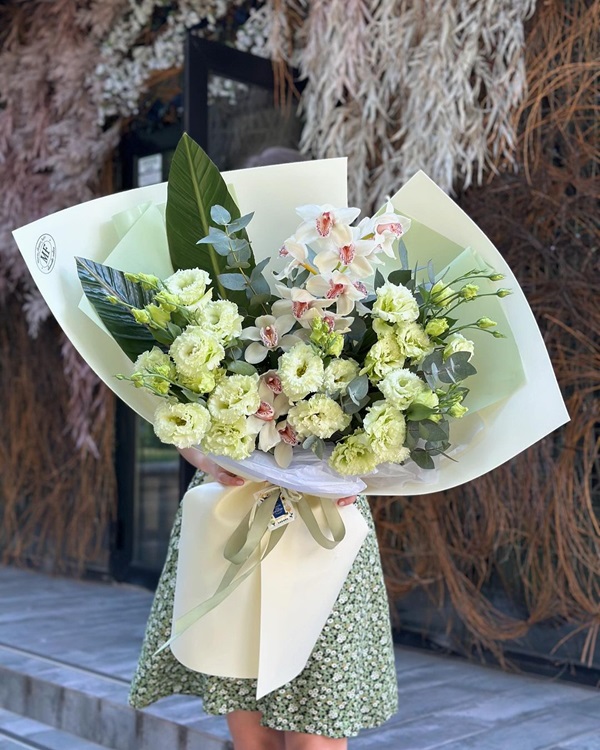
Many people believe that cut flowers, like houseplants, need bright sunlight. However, this is a common misconception. Unlike living plants, which continue to photosynthesize and receive nutrients from the soil, cut flowers no longer have roots and cannot make up for moisture loss. That is why excessive light can speed up wilting.
Direct sunlight causes intense evaporation of moisture from the surface of petals and leaves. In hot conditions, water also evaporates from the stems faster than the flowers can absorb it. As a result, the flowers lose firmness, their petals become dry and brittle, and the leaves curl. Roses, tulips, orchids, and hydrangeas are especially sensitive to this kind of exposure.
In addition, the high temperature created by sunlight promotes the rapid breakdown of organic matter in the water. If a bouquet stands in a vase in the sun, the water becomes cloudy faster, bacteria multiply in it, and this leads to stem rot. Even regular water changes do not always solve the problem if the flowers are kept in a place that is too warm.
Some flowers, such as carnations and chrysanthemums, can tolerate more sunlight than others. However, even they begin to lose freshness faster after prolonged exposure to ultraviolet light. If a bouquet stands near a window on a hot summer day, the flowers may wilt in just a few hours. That is why florists recommend avoiding places exposed to direct sunlight when displaying cut flowers.
One of the main reasons flowers wilt faster in the sun is the increase in temperature. In enclosed spaces, sunlight not only warms the air but also creates a greenhouse effect, increasing the rate of moisture evaporation from both the flowers and the water in the vase.
When the air temperature rises above 25°C, most cut flowers begin to lose moisture much faster than they can absorb it. This is especially critical for flowers with thin petals, such as irises, poppies, and anemones. In hot conditions, they may lose their freshness completely within just 1–2 days.
High temperatures also speed up metabolic processes in plant cells, which causes faster aging. Flowers standing in the sun use up their remaining nutrients more quickly, and their life cycle becomes shorter. The petals lose elasticity, become soft, and then begin to fall.
Another important point is the temperature difference between day and night. If a bouquet stands in strong sunlight during the day and the room becomes cool at night, this creates additional stress for the flowers. Because of these fluctuations, some flowers, such as lilies and gladioluses, may begin to drop their buds before they fully open.
To prolong the life of a bouquet, it is better to place it where the temperature remains stable and does not exceed 20–22°C. This helps reduce moisture loss and keeps the flowers fresh for as long as possible.
Few people think about the fact that direct sunlight not only harms the flowers themselves, but also speeds up the spoilage of the water in the vase. Under the influence of light, the water heats up, creating favorable conditions for bacterial growth. In warm water, rotting processes begin much faster, and within a day the flowers may start rotting near the base of the stems.
One sign that the water is deteriorating is a change in its color. If a bouquet stands in a sunny place, the water in the vase may become cloudy or take on a yellowish tint. This happens because organic residue, such as microscopic particles of stems and leaves, begins to decompose under the effect of heat.
Some flowers release substances into the water that accelerate decay. For example, daffodils release a slime that, when warmed, becomes an ideal environment for bacteria to multiply. If such flowers are kept in the same vase with other kinds, such as roses or peonies, they can make them wilt faster as well.
To avoid such problems, the water in the vase should be changed at least once a day, and the vase itself should be washed thoroughly before each refill. You can also use special antiseptic additives that slow bacterial growth and help preserve the flowers’ freshness.
Although most cut flowers do not tolerate direct sunlight well, there are a few exceptions. Some plant species are more resistant to high temperatures and do not lose moisture as quickly.
For example, sunflowers are one of the few flowers that do well in bright places. They are naturally adapted to sunny conditions and can stay fresh longer than many other flowers.
Gerberas are also quite resistant to bright light, though they require a sufficient amount of water. If a bouquet of gerberas is standing in the sun, it is important to make sure that the water level in the vase remains adequate.
Some wildflowers, such as cornflowers and daisies, can also tolerate sunlight longer than roses or tulips. Even so, at high temperatures they still lose freshness faster than they would in the shade.
To extend the life of cut flowers, it is important to choose the right place for them in the home. The best option is partial shade, where the bouquet is not exposed to direct sunlight. A table, dresser, or nightstand placed away from the window is ideal.
Flowers should not be placed near heat sources such as radiators, heaters, or kitchen appliances. Warm air, like sunlight, speeds up moisture evaporation and shortens the lifespan of flowers.
Cut flowers should not be kept in direct sunlight, because this speeds up wilting. High temperatures, rapid moisture loss, heating of the vase water, and active bacterial growth all shorten the life of a bouquet.
To keep flowers fresh longer, it is better to place them in partial shade, away from windows and heat sources. Proper care and regular water changes will help preserve their beauty for as long as possible.